
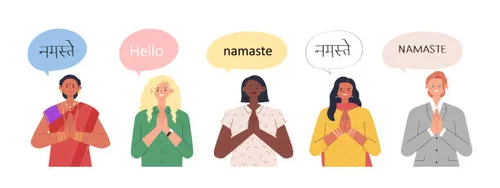
What is “Namaste”?
Namaste is a respectful and graceful greeting widely used in India and many parts of Asia. It is a spiritual gesture that holds deep meaning beyond just saying hello. It’s a way to acknowledge the divine in others and express respect, gratitude, and humility.
| Language | Meaning |
|---|---|
| English | “I bow to you” or “The divine in me honors the divine in you.” |
| Hindi | “मैं आपके अंदर मौजूद दिव्यता को नमन करता हूँ।” |
| Sanskrit | “नमः” (Namah) = bow, honor; “ते” (te) = you → “नमस्ते” = I bow to you |
Namaste is not just a formality—it’s an acknowledgment that all beings are connected and equal at the spiritual level.
Anjali Mudra – The Gesture Behind the Greeting
The word Anjali means offering or reverence, and Mudra refers to a symbolic hand gesture used in yoga, meditation, and spiritual practices. In Anjali Mudra, all fingers are pressed together at the heart center, forming a prayer-like pose.
Symbolism of the Fingers in Anjali Mudra
| Finger | Element/Meaning | Spiritual Significance |
|---|---|---|
| Thumb | Fire (Agni) | Represents divine will and transformation |
| Index Finger | Air (Vayu) | Ego, individuality, and self-awareness |
| Middle Finger | Space (Akash) | Balance, calmness, inner expansion |
| Ring Finger | Earth (Prithvi) | Stability, groundedness, and physical body |
| Little Finger | Water (Jal) | Emotions, sensitivity, and connection |
When all five fingers are pressed together, it signifies the union of the elements within the human being, promoting harmony between body, mind, and spirit.
Sanskrit Meaning of Anjali Mudra
- Anjali (अञ्जलि) – Offering, reverence, respect
- Mudra (मुद्रा) – Gesture, seal, or symbolic expression
Together, Anjali Mudra means “the gesture of offering with devotion and sincerity.”
Where Did Namaste and Anjali Mudra Originate From?
Historical Timeline
| Period | Key Events and Developments |
|---|---|
| Vedic Period (~1500 – 500 BCE) | Early mentions of respect rituals in scriptures; spiritual connections emphasized between humans and nature |
| Upanishadic Era (~800 – 200 BCE) | Philosophical discussions about Atman (soul) and Brahman (universal consciousness), which influenced greetings like Namaste |
| Classical Sanskrit Period (~200 BCE – 1200 CE) | Use of “Namah” and “Anjali” in spiritual practices and temple rituals across India |
| Medieval Period (~1200 – 1800 CE) | Spread of yoga, meditation, and devotional practices incorporating Anjali Mudra and Namaste into daily life |
| Modern Times (19th Century onward) | Adopted globally, especially through yoga movements, meditation retreats, and intercultural spiritual exchanges |
The gesture has been practiced for thousands of years and is rooted in ancient Indian spirituality, emphasizing respect, humility, and unity.
Why is Anjali Mudra Important?
- Balances the Body’s Energy: It aligns the left and right hemispheres of the brain, promoting inner peace.
- Encourages Respect and Equality: It reminds us that all beings are connected beyond physical differences.
- Calms the Mind: It helps reduce stress and anxiety by grounding your attention at the heart center.
- Used in Meditation and Yoga: It prepares the mind for deeper focus and spiritual awareness.
Spiritual Roots in Bharat
Bharat is often called the land of sages, seekers, and spiritual explorers. From the Vedas and Upanishads to Bhagavad Gita and Puranas, the teachings emphasize the interconnectedness of all life. The concept that every being carries a divine spark inside is central to Bharat’s way of thinking. Namaste, meaning “I bow to the divine within you,” perfectly reflects this belief.
My Reflection
Whenever I say “Namaste” and place my hands in Anjali Mudra, I feel a deep sense of connection—not only with the person I am greeting but also with myself. The pressing of the fingers together reminds me that all the elements, emotions, and energies within me are coming together in balance and harmony. It’s a simple yet profound gesture that transforms ordinary communication into a spiritual experience.
To know more you can message me : https://n-k.co.in/from-mooshak-to-modak-life-lessons-from-lord-ganesha/