
“The people who are crazy enough to think they can change the world, are the ones who do.” – Apple’s “Think Different” campaign
Apple Logo Story : From Fruit to Actual Brand
| Stage | Details |
|---|---|
| Founders | Steve Jobs (vision & marketing), Steve Wozniak (engineering), Ronald Wayne (early partner) |
| Founded | 1976, in Steve Jobs’ parents’ garage, Los Altos, California, USA |
| Pilot Team Roles | Jobs → Sales & deals, Wozniak → Built computers, Wayne → Agreement & logo |
| First Order | From The Byte Shop – 50 Apple I computers at $500 each |
| Challenge | No money for parts to build computers |
| Solution | Jobs convinced suppliers to give parts on credit, Wozniak built by hand |
| Fulfillment | Delivered all 50 units on time → Apple’s first revenue |
| Key Supporter | Mike Markkula (investor, 1977) – invested $250,000, guided business |
| Outcome | Transformed from garage startup → successful company foundation |
🌑 The Dark Days
In the mid-1990s, Apple was broken.
- Sales were falling.
- Competitors like Microsoft had taken over the PC market.
- Apple had too many confusing products with no clear vision.
By 1997, analysts predicted Apple would go bankrupt. The dream of Steve Jobs and Steve Wozniak looked finished.
🌟 The Turning Point
When Steve Jobs returned to Apple in 1997, he saw the company needed more than just new computers—it needed soul, identity, and vision.
So, he asked a simple but powerful question:
“Who is Apple for?”
The answer became clear: Apple wasn’t just for computer users. Apple was for dreamers, creators, rebels, and innovators.
🎯 The Plan
Apple designed a 3-step revival strategy:
| Step | What Apple Did | Why It Worked |
|---|---|---|
| 1. Simplify | Cut down dozens of confusing products to a few core ones. | Focused brand identity. Customers knew what Apple stood for. |
| 2. Inspire | Launched the “Think Different” campaign. Celebrated Gandhi, Einstein, Martin Luther King Jr., Picasso. | Created emotional identity beyond technology. |
| 3. Innovate | Released bold, user-friendly products like the iMac (1998), then the iPod, iPhone, and iPad. | Blended design, simplicity, and lifestyle appeal. |
🖼️ The Campaign
The “Think Different” campaign was not about computers. It was about beliefs.
“Here’s to the crazy ones. The misfits. The rebels. The troublemakers. Because the ones who are crazy enough to think they can change the world, are the ones who do.”
This message gave people pride in choosing Apple. Buying a Mac wasn’t buying a computer—it was joining a movement.
📈 The Results
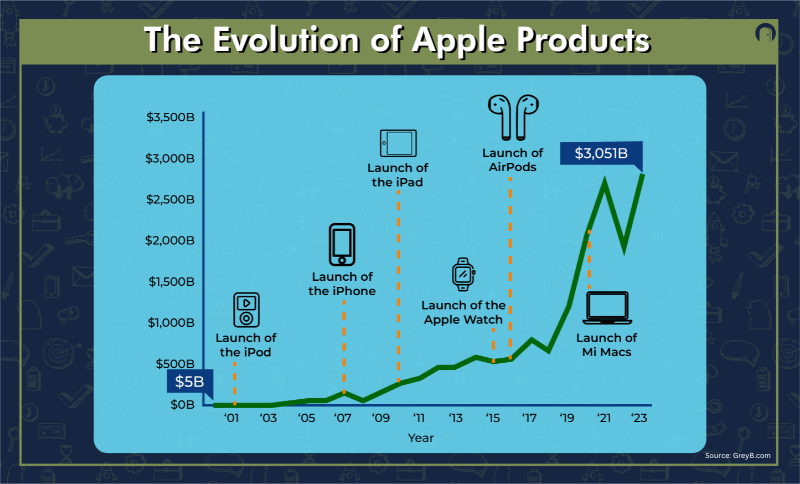
- Apple’s brand value started climbing rapidly.
- By 2001, the iPod revolutionized music.
- By 2007, the iPhone changed communication forever.
- Today, Apple is the most valuable company in the world, worth over $3 trillion.
🔍 Market Study & Product Placement
Apple studied the market carefully:
- People didn’t want complicated specs → Apple offered simplicity.
- People didn’t want “just a tool” → Apple sold creativity and lifestyle.
- People loved design → Apple made products beautiful as well as functional.
- People wanted identity → Apple gave them a badge of innovation.
💡 Lessons for Us
- Simplify – Cut the noise, focus on your best.
- Connect Emotionally – Don’t sell features, sell stories.
- Be Bold – Don’t fear being different.
- Inspire People – Make them feel part of something bigger.
🌈 Thought
Apple didn’t just rise again because of better computers. It rose because it gave people a reason to believe.
“Marketing is about values. It’s not about making people buy—it’s about making people belong.” – Steve Jobs
Every brand, every career, every person will face a fall. But with clarity, courage, and creativity—you can turn failure into history’s greatest comeback.
For more reach to us, we can help you create your stories : https://n-k.co.in/why-an-organic-social-media-platform-is-more-powerful-than-paid-promotions/