
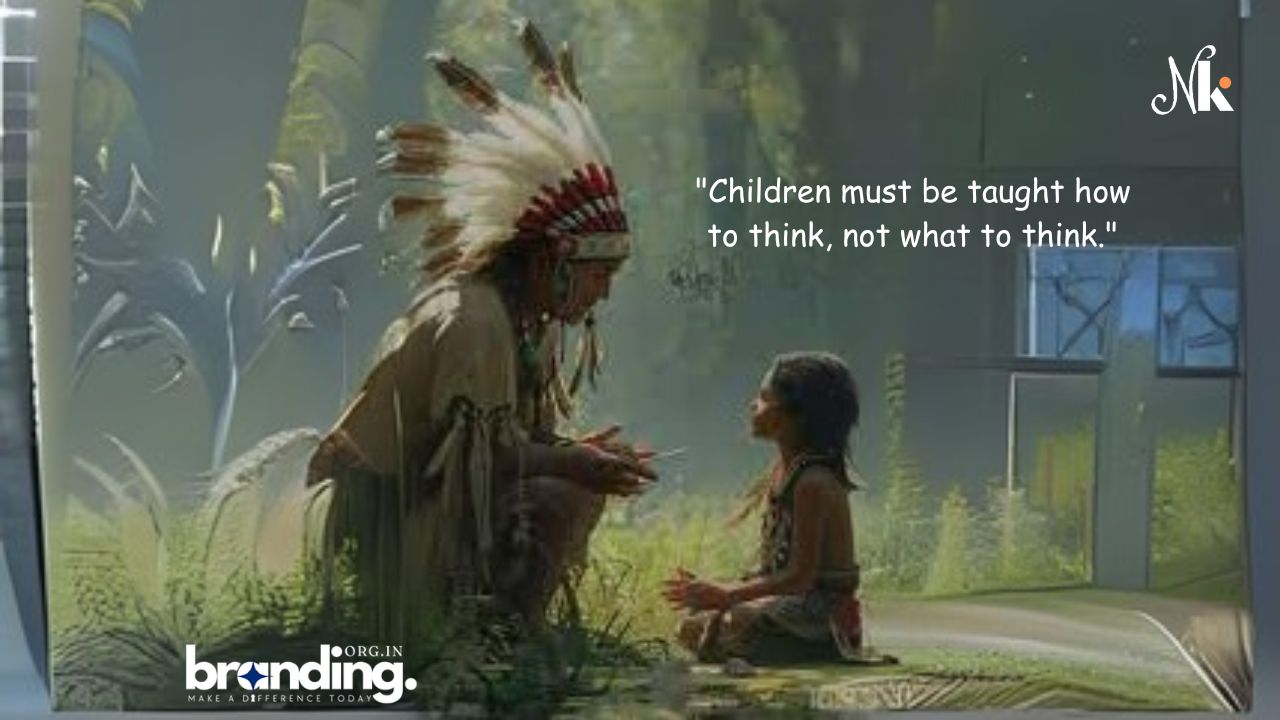
“Education is not the learning of facts, but the training of the mind to think.” – Albert Einstein
A Journey Through History: How We Learned
For centuries, education was about memorization and obedience. Students were taught what to think, not how to think. Ancient schools focused on rote learning of religious texts, mathematics, and literature—emphasis was on repeating knowledge, not questioning it.
In the industrial era, schools became factories for uniformity. The purpose was clear: produce workers, not innovators. Students followed rules, memorized, and performed, but curiosity was optional.
Even today, in many parts of the world, education still struggles with this legacy. Standardized tests dominate. Creativity, critical thinking, and problem-solving are often treated as secondary skills.
Current Scenario: The Gap
| Past | Present | Needed Change |
|---|---|---|
| Memorization-focused | Exam-oriented, score-driven | Focus on understanding and thinking |
| Teacher-centered | Curriculum-centered | Student-centered learning |
| Obedience over inquiry | Knowledge over application | Encourage questioning, analysis, exploration |
| Knowledge as static | Knowledge as dynamic | Teach adaptability and lifelong learning |
| Limited creativity | Limited critical engagement | Foster creativity and real-world problem solving |
Key Areas to Keep an Eye On
- Critical Thinking – Teach students to analyze, evaluate, and question information.
- Problem Solving – Encourage solutions, not just answers.
- Decision Making – Enable students to weigh options and foresee consequences.
- Innovation & Creativity – Let curiosity drive projects, experiments, and exploration.
- Collaboration – Encourage teamwork and the sharing of diverse perspectives.
- Emotional Intelligence – Teach empathy, self-awareness, and resilience.
- Adaptability – Prepare students for a rapidly changing world.
How to Improve Students’ Thinking Skills
- Inquiry-Based Learning: Replace lectures with exploration and questions.
- Project-Based Learning: Real-world problems encourage practical thinking.
- Debates & Discussions: Train students to defend ideas logically.
- Socratic Method: Ask “why” and “how” to cultivate curiosity.
- Mistake-Friendly Environment: Make failure a step towards mastery.
- Interdisciplinary Approach: Connect arts, sciences, and humanities for holistic thinking.
Case Study: From Memorization to Mastery
History: In early 20th-century India, schools focused on memorization. Students could recite textbooks perfectly but struggled with practical application. Teachers were authoritative; questioning was discouraged.
Current Scenario: Many schools now adopt technology-based learning and interactive classrooms. However, exams still reward correct answers more than creative thinking.
Required Change: Schools must integrate critical thinking, problem-solving, and creativity as core subjects. Assessment should value insight and innovation, not just rote memory.
My Opinion
Education must evolve from a system that fills minds with facts to one that ignites minds with ideas. Our goal should not be producing students who repeat, but those who innovate, question, and shape the future. Every child has the potential to be a thinker, a creator, and a problem solver—the challenge is giving them the right tools and environment.
“The function of education is to teach one to think intensively and to think critically. Intelligence plus character—that is the goal of true education.” – Martin Luther King Jr.