
“When food comes from the soil of our land, it becomes the strength of our body.”
🌿 Pearl Millet — India’s Silent Guardian of Health
Pearl millet, known across India as Bajra, is one of the oldest and most powerful grains ever cultivated on Indian soil.
Standing strong in deserts, drylands, and harsh climates, this humble millet has protected our ancestors for centuries—with nutrition that modern diet trends are only now beginning to rediscover.
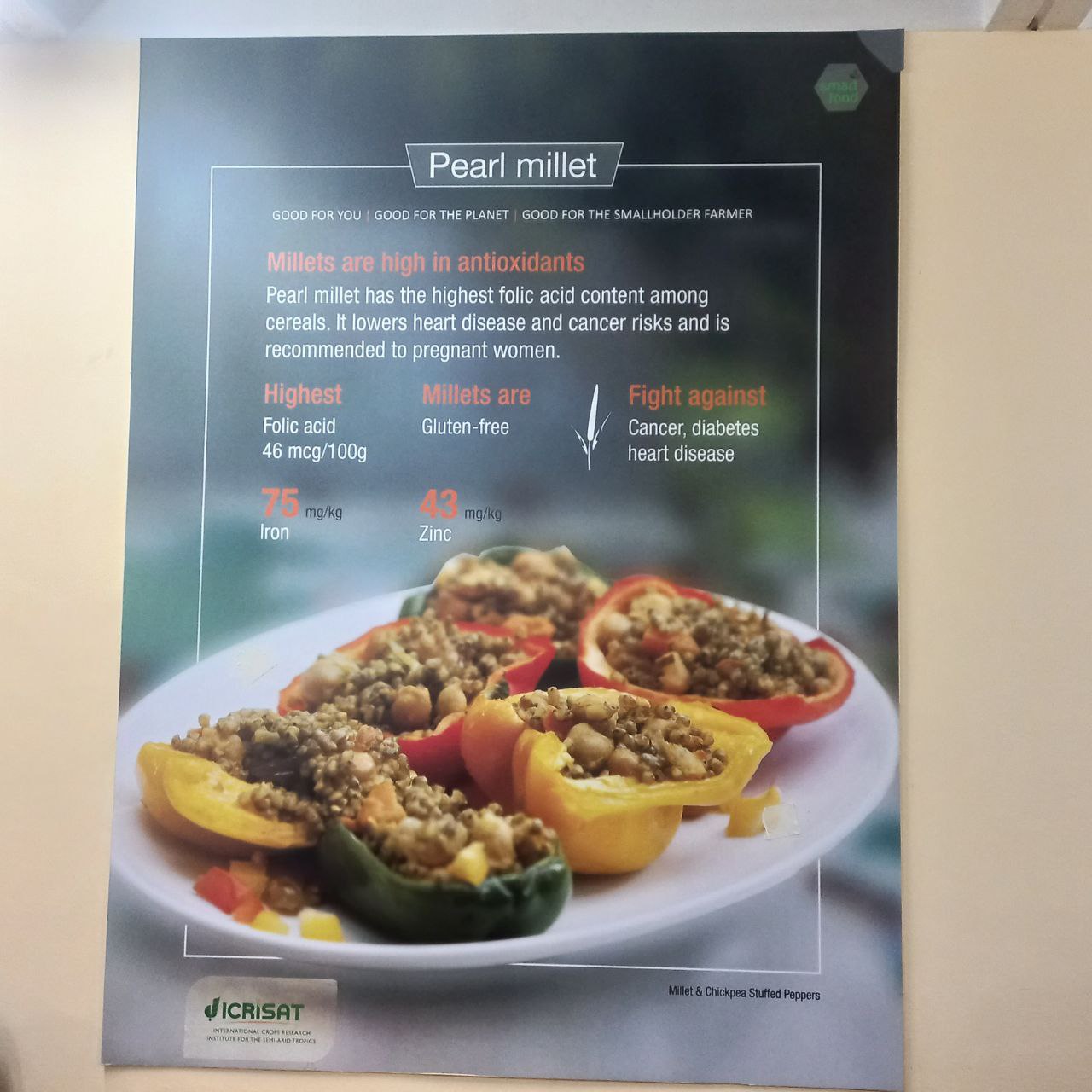
The poster you captured at ICRISAT beautifully represents this truth.
Right in their canteen, knowledge meets nourishment.
It isn’t just a meal corner—it is a space that teaches how food can heal, protect, and empower.
🌟 Why Pearl Millet Is Truly a Supergrain
According to the poster:
⭐ Millets Are High in Antioxidants
They fight free radicals, reduce inflammation, and protect the body from chronic diseases.
⭐ Highest Folic Acid Content
Pearl millet contains 46 mcg/100g of folic acid—
the highest among cereals—
making it highly recommended for pregnant women and for boosting cell health.
⭐ Rich in Iron & Zinc
- 75 mg/kg Iron
- 43 mg/kg Zinc
These minerals are essential for strong blood, immunity, brain development, and stamina.
⭐ Gluten-Free
Perfect for digestion, weight management, and modern dietary needs.
⭐ Fights Against Major Diseases
Pearl millet helps protect the body from:
✔ Cancer
✔ Diabetes
✔ Heart disease
This is exactly why our ancestors relied on bajra during winter and heavy labour seasons—it gave endurance, warmth, and long-lasting strength.
🍽️ The Dish in the Image: Millet & Chickpea Stuffed Peppers
The picture shows a wholesome, colourful meal made using:
- Pearl millet
- Chickpeas
- Fresh vegetables
This dish is both nutrient-dense and climate-smart, showing how traditional grains can be turned into modern, delicious recipes without losing their essence.
📜 A Storytelling Moment — “Strength Grown from the Desert”
Years ago, in a desert village of Rajasthan, a farmer’s family survived harsh winters and long working days with one staple—bajra rotis cooked on a clay stove.
Even when the land cracked under heat and water was scarce, bajra stood tall in the fields, refusing to die.
One winter evening, the farmer’s mother told her granddaughter,
“Beta, this grain is not ordinary. It carries the strength of the desert and gives that strength to us.”
Today, science confirms what she knew intuitively—
pearl millet’s minerals, antioxidants, and warming nature make it a shield for the human body, especially in tough climates.
What we call “ancient wisdom” was actually pure science practiced with simplicity.
🌾 Table: Why Pearl Millet Deserves a Place in Every Indian Home
| Feature | Details |
|---|---|
| Key Nutrients | Folic acid (46 mcg/100g), Iron (75 mg/kg), Zinc (43 mg/kg) |
| Health Benefits | Fights cancer, diabetes, heart disease |
| Best Season | Winter (warm food), but good year-round |
| Digestion | 100% gluten-free |
| Who Should Eat It | Pregnant women, elderly, diabetic individuals, children, fitness enthusiasts |
| Best Ways to Consume | Bajra roti, khichdi, stuffed peppers, porridge, ladoos |
🌱 Pearl Millet & India’s Climate — A Perfect Match
India’s diverse climate asks for grains that are:
- resilient
- nutritious
- water-efficient
- farmer-friendly
- adaptable
Pearl millet checks all these boxes.
It grows where many other crops fail—
and through this resilience, it feeds millions.
This is why ICRISAT plays such a vital role in promoting millets for health and sustainability.
💬 My Opinion
Pearl millet is not just food—it is strength you can taste.
A grain that grew in our soil for thousands of years still holds the power to heal modern bodies and lifestyles.
I believe every Indian home should embrace bajra, not as a trend but as a return to our roots.
Whether it’s bajra roti, porridge, or innovative dishes like stuffed peppers, this grain deserves a comeback—stronger than ever.