
Chickpeas (Chana) are among the oldest cultivated crops in the world, dating back 7,000+ years.
Archaeological records show chickpea remains in ancient civilizations like:
- Indus Valley (India–Pakistan region)
- Mesopotamia
- Ancient Egypt
But in India, chickpeas became far more than a crop.
They became food for survival, strength, and spiritual purity.
🌼 Why Chickpeas Became India’s Healthy Hero
- They grow in harsh climates
Our ancestors chose chickpeas because they survive dry, semi-arid regions—something India had plenty of. - High protein, naturally
Chickpeas are one of the richest plant proteins, making them a perfect match for India’s vegetarian traditions. - Long-lasting energy
Farmers, labourers, and warriors ate roasted chana, sattu, dal, and chole because it gave sustained energy for long hours of physical work. - Low cost, high nutrition
Rich or poor, every family could depend on chickpeas to stay healthy. - Part of rituals & traditions
Even today, chana dal and roasted chana are used in:- poojas
- vrat (fasting foods)
- prasadam
This shows how food and spirituality were always connected.
🌿 ICRISAT’s Insight: Why Pulses Are a Superfood Today
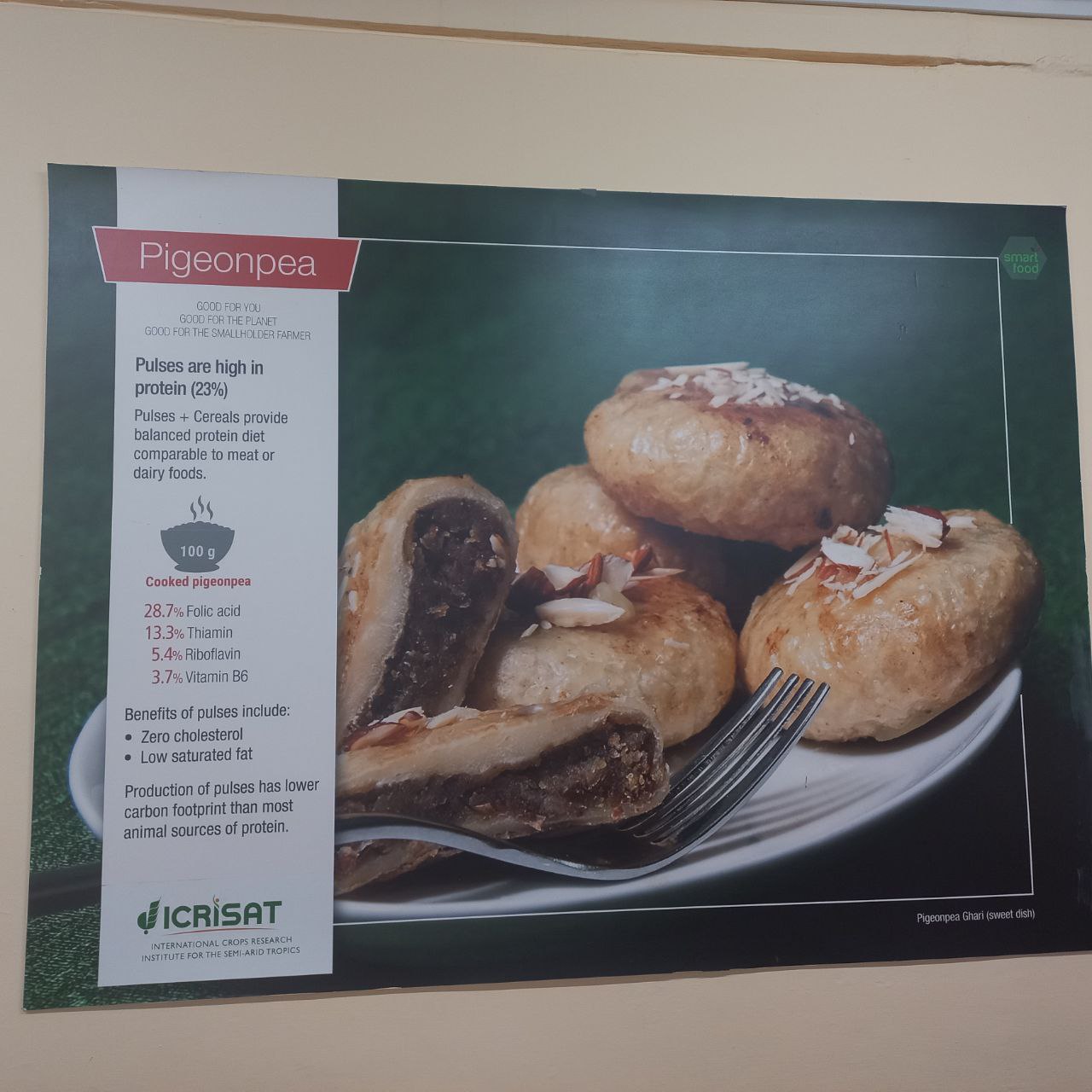
From the image you shared, these key points stand out:
⭐ Pigeonpea (Tur Dal) Nutritional Facts per 100g (Cooked)
- 28.7% Folic Acid
- 13.3% Thiamin
- 5.4% Riboflavin
- 3.7% Vitamin B6
⭐ Health Benefits of Pulses
- Zero cholesterol
- Low saturated fat
- Balanced protein when combined with cereals
- High in vitamins & minerals
- Sustainable crop with lower carbon footprint
Pulses + cereals (like rice or roti) create a complete protein, equivalent to meat or dairy.
This is why dal–roti and dal–chawal have been India’s strongest, most balanced meals for centuries.
🥟 The Dish in the Image: Pigeonpea Ghari (Sweet Dish)
The photograph shows a beautifully crafted Indian sweet stuffed with pigeonpea filling, topped with almond flakes.
This is a perfect example of how pulses can be used not only in savory dishes but also in innovative, healthy desserts.
📜 A Storytelling Moment — “The Pulse of the People”
Many years ago in an Indian village, a farmer named Devram worked sunrise to sunset in the fields.
His strength didn’t come from meat, supplements, or energy drinks—
it came from a simple bowl of pigeonpea dal his wife prepared every morning.
One day, a traveler asked him,
“How do you work so tirelessly? What is your secret?”
Devram smiled and pointed to the steaming dal on his plate.
“This,” he said,
“is the food our land gives us. It is enough to keep my body strong and my spirit calm.”
His answer reflects the truth we often forget—
our bodies thrive when we eat what grows in our soil.
Today, science confirms what village wisdom always knew—
pulses are not ordinary grains;
they are protein, energy, immunity, and sustainability in one bowl.
🌾 Why Chickpeas & Pigeonpea Are India’s Timeless Superfoods
| Pulse | Key Benefit | Why India Loves It | Best Way to Consume | Season |
|---|---|---|---|---|
| Chickpea (Chana) | High protein, high fiber | Affordable, sustaining energy | Chole, sattu, roasted chana | All seasons |
| Pigeonpea (Tur/Arhar) | Rich in folic acid & B vitamins | Light, easy to digest | Dal, khichdi, sweets (as seen in image) | All seasons |
| Roasted Gram | Instant stamina | Ideal snack for farmers & workers | Roasted chana, sattu drink | Summer |
| Chana Dal | Complete protein with cereals | Heart-healthy & versatile | Dal, sweets, snack mixes | All |
💬 My Opinion
Pulses are the bridge between our past wisdom and future health.
They are sustainable, climate-friendly, farmer-friendly, and body-friendly.
In my view, every Indian household should celebrate pulses—
not just as dal, but as snacks, desserts, drinks, and daily meals.
They are the most powerful, affordable, and natural superfoods our ancestors gifted us.