
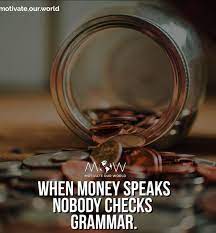
Ever noticed how the world suddenly nods in agreement when money enters the conversation? Yet, if it were your words, your grammar, spelling, or punctuation would be under a microscope. Welcome to the irony of life — where cash talks, and rules of language politely step aside.
Take a little story:
Rajesh, a small-town entrepreneur, started selling handmade soaps. His ads were full of spelling mistakes — “Handemade Soaps for You!” — but priced at ₹999 per piece. Surprisingly, the orders poured in. People overlooked the grammar because the price tag and perceived luxury value spoke louder. Meanwhile, his cousin, Ramesh, wrote flawless, award-winning product descriptions for his ₹199 soaps… and barely made a sale.
Moral? Money doesn’t just talk. It yells, shouts, and occasionally does a happy dance in your bank account while grammar sits quietly in the corner, sipping tea.
Here’s the funny part:
- At a posh party, someone said, “I don’t care how it’s said; can it pay my bills?”
- Another friend replied, “If punctuation could earn a salary, I’d be rich!”
Ironically, the very rules we painstakingly follow in school — commas, apostrophes, subject-verb agreement — are invisible to the people who matter most in the economy. Your paycheck doesn’t come with a grammar inspection.
Quotes to chuckle at:
- “Money can’t buy happiness, but it can make your grammar mistakes look fabulous.”
- “Life is ironic: the louder your wallet, the softer your Oxford comma.”
- “Spellcheck won’t pay your rent, but cash will.”
So next time you’re fretting over your emails, pitches, or social media posts, remember: the world may forgive a typo if your price tag is right. Irony? Absolutely. Humorous? Definitely. True? Uncomfortably so.
In life, money speaks fluently; grammar is still learning the language.
The Other Side of the Coin: Money Talks, but Clarity Wins
While it’s funny that a ₹999 “Handemade Soap” can sell like hotcakes despite spelling errors, there’s a limit to what money can cover:
- Reputation Matters
Money can attract attention, but credibility sticks. Consistent mistakes in communication can slowly erode trust. Imagine paying top dollar for a luxury brand whose brochure reads “Exqusite Perfume”. You might buy once, but repeat customers notice. - Long-Term Success Needs Both
Cash may open doors, but communication opens relationships. Investors, partners, and even customers prefer clarity. Grammar may be silent, but it builds trust. - Irony Strikes Back
Sometimes, money speaks today, but bad communication bites tomorrow. You may sell a product with misspelled ads, but if your instructions are confusing or contracts ambiguous, that money disappears fast.
Funny Quote:
- “Money can rent a mansion, but it can’t rent respect for sloppy sentences.”
- “You can buy a lot, but you can’t buy someone reading your typos with patience.”
Key Insight:
The first story was funny because money overrides grammar temporarily. The other side? Grammar, clarity, and communication are the silent allies of lasting success. Money talks loudly, but words whisper truth — and sometimes, whispers outlast the loudest shouts of cash.
Your Opinion
Money undoubtedly has the power to make people overlook mistakes, whether in grammar, presentation, or even ethics sometimes. It opens doors, grabs attention, and gives temporary credibility. But the other side of the coin is that lasting success requires clarity, communication, and trust. Grammar, precision, and attention to detail might not shout as loudly as money, but they build relationships, credibility, and repeat business. In life, money may speak first, but words whisper truths that last far longer. The smartest approach is when money and clear communication work together.