
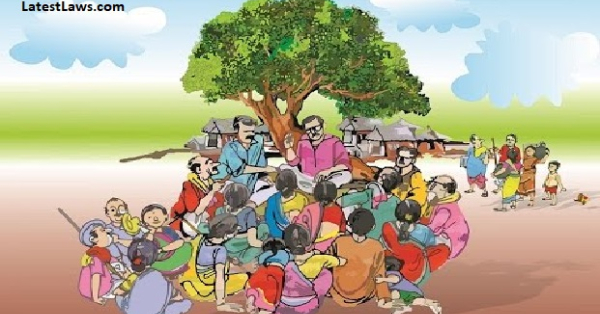
Here’s a comparative narrative that explains centralized, decentralized, and distributed systems using the village-sarpanch analogy. This story will help highlight how each system handles power, trust, transparency, and corruption.
Phase 1: Centralized System
📍 Structure: Power and information are controlled by one person – the Sarpanch.
In the beginning, each village had a Sarpanch. Villagers would approach the Sarpanch with their problems: irrigation, roads, welfare funds, etc. The Sarpanch had full control – he handled accounts, decisions, and resource distribution.
At first, this worked fine. But as funds increased, so did greed. The Sarpanch started manipulating records, favoring friends, taking bribes, and hoarding money. Villagers had no way to verify anything.
Other villages faced the same issues. Eventually, all Sarpanches realized they could collaborate and protect each other. They formed a network of corrupted leaders, making it impossible for villagers to raise their voice.
📉 Result:
- Lack of transparency
- High chance of corruption
- No accountability
- Power imbalance
- Villagers suffer despite working hard
💡 This reflects a Centralized System – one central authority controls everything, and if it fails or becomes corrupt, the whole system collapses.
Phase 2: Decentralized System
📍 Structure: Power is distributed among multiple independent Sarpanches, but each still works individually.
The government realizes the problem and lets villages manage their own affairs, hoping decentralization will help. Now, each village gets its own funds and can set up its own processes, slightly reducing the power of one central Sarpanch.
However, each village still depends on its own Sarpanch. Some improve, some remain corrupt. The corruption is less concentrated, but it still exists. There’s no collaboration among villagers, and still limited transparency.
📉 Result:
- Slight improvement
- Still depends on local leaders
- Some villages perform better
- Corruption continues, though localized
💡 This is a Decentralized System – power is spread, but trust still lies with middle authorities.
Phase 3: Distributed System
📍 Structure: Everyone has equal access to information and decision-making.
Finally, the villagers decide enough is enough. They form a Distributed Village System, using digital tools and transparent processes:
- Every fund received is publicly visible
- All transactions are recorded and shared
- Decisions are taken via community voting
- Anyone can verify records (like a blockchain ledger)
Now, no single person can manipulate data. Everyone participates, and trust is built into the system, not in any individual. Sarpanch now becomes a servant leader, not an unchecked ruler.
📈 Result:
- Full transparency
- No single point of corruption
- Power lies with people
- Hard-earned money is used efficiently
- Villagers feel empowered and informed
💡 This is a Distributed System – where every participant holds a copy of data, decisions are transparent, and no one can alter facts for personal gain.
🧮 Comparative Table
| System Type | Power Center | Corruption Risk | Transparency | Control | Example |
|---|---|---|---|---|---|
| Centralized | One person (Sarpanch) | Very High | Low | Full with one | Old village system |
| Decentralized | Several centers (Sarpanches) | Medium | Medium | Local leaders | Separate village Sarpanchs |
| Distributed | Everyone (All villagers) | Very Low | High | Shared by all | Modern digital village system |
In a centralized system, one person like the Sarpanch has all the power. Villagers depend completely on him, which can lead to high corruption, low transparency, and no control for the people. This is like the old village system where only the Sarpanch handled everything.
A decentralized system is a bit better. Here, each village has its own Sarpanch. Some do a good job, some don’t. There is medium corruption, some transparency, and villagers have limited control. It’s better than before, but still not perfect.
In a distributed system, everyone in the village is involved. All records are open, decisions are shared, and everyone can see and check everything. This system has low corruption, high transparency, and shared control. It works like a modern digital village, where the power is with the people, not just one leader.
| CENTRALIZED | DECENTRALIZED | DISTRIBUTED |
|---|---|---|
| 👑 One Sarpanch | 👥 Multiple Sarpanchs | 🌐 All villagers |
| 💰 Hidden funds | 💸 Mixed transparency | 📊 Shared Ledger |
| 😡 Frustrated villagers | 😐 Mixed feelings | 😀 Empowered villagers |
| 🪑 Power with one | 🪑 Power with few | 🫱 Power with all |
💬 Final Thought
In a world where trust is constantly tested, Distributed Systems empower people, reduce corruption, and foster collective responsibility. Just like those villagers, today’s citizens and businesses are moving towards systems where information is open, decisions are shared, and power is balanced.
If you’re building anything involving public welfare, finance, or governance — think like the villagers who chose the distributed path.
Now, lets compare it with Blockchain systems.
🏡 Village Systems vs 💻 Blockchain Systems
1. Centralized System (Like the old village Sarpanch model)
- Village Analogy: One Sarpanch controls everything — funds, decisions, records. Villagers have to trust him blindly.
- Blockchain Parallel: A centralized database controlled by one authority (like a bank, government, or company).
- Problems:
- If the Sarpanch (or server) is corrupt or fails, the whole system is affected.
- High risk of fraud or data tampering.
- No transparency for users.
🔗 Example: Traditional banking systems, centralized apps like Facebook or Google.
2. Decentralized System (Multiple village Sarpanchs)
- Village Analogy: Each village has its own Sarpanch. They make decisions locally, but still hold power individually.
- Blockchain Parallel: Decentralized networks where power is spread across multiple nodes or organizations, but each controls its own data.
- Features:
- Less risk than centralized.
- Some transparency, but still depends on the trust in each local authority.
- Better reliability, but not fully secure against collusion or bias.
🔗 Example: Consortium blockchains like Hyperledger or Quorum (used by multiple banks or companies together).
3. Distributed System (All villagers participate equally)
- Village Analogy: All villagers share information, see the records, and vote on decisions. No one can hide or manipulate data.
- Blockchain Parallel: A distributed ledger like Bitcoin or Ethereum, where every participant (node) holds a full copy of the data, and decisions are made through consensus.
- Features:
- Highly transparent — everyone sees the same truth.
- Very hard to corrupt — changing data requires control over most of the network.
- Trust is built into the system, not any one person.
🔗 Example: Public blockchains like Bitcoin, Ethereum — open, secure, and community-driven.
✅ Summary Table
| Village Model | Blockchain System | Control | Trust Level | Transparency | Example |
|---|---|---|---|---|---|
| One Sarpanch (Centralized) | Centralized Server | One Authority | Low | Low | Bank database |
| Many Sarpanches (Decentralized) | Consortium Blockchain | Few authorities | Medium | Medium | Hyperledger, Quorum |
| All Villagers (Distributed) | Public Blockchain | Shared by all | High | High | Bitcoin, Ethereum |
🎯 Final Thought:
Just like villagers moved from depending on one leader to sharing power and truth among themselves, blockchain moves us from centralized control to distributed trust — where no one can cheat the system, and everyone can see the truth.
Easy Summary: Village Story vs Blockchain
| Village Style | Blockchain Style | Who’s in Control? | How Much Can You Trust It? | Can Everyone See What’s Happening? | Example |
|---|---|---|---|---|---|
| 👑 One Sarpanch | Centralized System | Only one person or group | ❌ Low – you must trust them | ❌ No – things can be hidden | Bank’s database |
| 🧑⚖️ Many Sarpanches | Decentralized System | A few leaders or groups | ⚠️ Medium – some trust needed | ⚠️ Some – depends on the group | Business-led blockchains like Hyperledger |
| 👨🌾 All Villagers Together | Distributed System | Everyone shares control | ✅ High – no need to trust anyone | ✅ Yes – all records are open | Bitcoin, Ethereum |
🧠 In Simple Words:
- Centralized is like one boss running everything. If they’re honest, it works. If not, everyone suffers.
- Decentralized means a few trusted people are in charge. It’s better but still depends on their honesty.
- Distributed means everyone works together, and the system itself makes sure things stay fair — no one can cheat, and everyone sees the same information.