
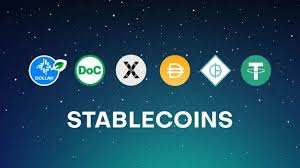
🌍 What is a Stablecoin?
A stablecoin is a type of cryptocurrency that is pegged (linked) to a stable asset like the US Dollar (USD) or even gold.
👉 In simple words: While Bitcoin or Ethereum prices go up and down a lot, a stablecoin stays steady, usually around ₹83 = $1 (Indian Rupee value).
📜 How Were Stablecoins Invented?
- Early cryptocurrencies like Bitcoin were too volatile (price changes quickly).
- Traders needed a safe place to park their money without converting back to traditional banks.
- That’s when Tether (USDT) was launched in 2014 – the first widely used stablecoin, pegged to the US Dollar.
👉 Technical Word: Pegged → Means tied or fixed to another currency (like $1 = ₹83).
💡 Usage of Stablecoins (with INR Examples)
| Use Case | Example in INR | Benefit |
|---|---|---|
| Trading | Instead of selling Bitcoin when price drops, you convert it into USDT (₹83 per coin) to avoid loss. | Safe from volatility |
| Remittances | Sending ₹50,000 to family abroad using USDT → cheaper & faster than banks. | Low fees, instant transfer |
| Payments | Freelancer in India gets paid ₹30,000 in USDC instead of waiting days for bank transfer. | Quick payments |
| Savings | Store ₹1,00,000 in a stablecoin to protect against crypto crashes. | Stable value |
Merits and Demerits of Stablecoins
| (Advantages) | (Disadvantages) |
|---|---|
| Stable value compared to volatile cryptos | Not 100% risk-free (some lost peg before) |
| Useful for trading and hedging | Centralized stablecoins depend on companies (like Tether, Circle) |
| Fast international transactions | Regulatory issues in some countries |
| Lower transaction costs | Some stablecoins are under scrutiny for reserves |
| Easy entry point for beginners | Can still face technical risks |
🔑 Types of Stablecoins
- Fiat-backed stablecoins → Supported by real money in bank accounts.
- Example: USDT (Tether), USDC (USD Coin), BUSD (Binance USD)
- Crypto-backed stablecoins → Backed by other cryptocurrencies.
- Example: DAI
- Algorithmic stablecoins → Controlled by computer programs (not always safe).
- Example: UST (Terra) → collapsed in 2022.
📊 Popular Stablecoins in the Market (2025)
- USDT (Tether) – biggest stablecoin
- USDC (USD Coin) – second largest, regulated in the US
- DAI – decentralized, backed by crypto
- TUSD (TrueUSD)
- FDUSD (First Digital USD)
🆕 Latest Update (2025)
- Tether (USDT) remains the largest stablecoin with over $120B in circulation.
- PayPal launched PYUSD, its own stablecoin for payments.
- India’s RBI is exploring a Digital Rupee (CBDC), which works similar to stablecoins but is government-controlled.
- Regulations are tightening worldwide to ensure stablecoins are properly backed by reserves.
🔄 Stablecoin vs Bitcoin vs Rupee
| Feature | Stablecoin | Bitcoin (BTC) | Rupee (INR) |
|---|---|---|---|
| Value Stability | ✅ Stable (pegged to $1 ≈ ₹83) | ❌ Very volatile (price changes quickly) | ✅ Stable, but inflation affects value |
| Backed By | Fiat currency, crypto, or algorithm | Only demand & supply (no physical backing) | Indian Government & RBI |
| Use Case | Trading, payments, remittances | Investment, store of value, borderless money | Everyday transactions in India |
| Speed of Transfer | Minutes (fast on blockchain) | Minutes to hours (depends on network) | Instant (within India, UPI/IMPS) |
| Cost of Transfer | Low fees (₹10–₹50) | Sometimes high (depends on network fee) | Low or free (UPI is free) |
| Acceptance | Growing globally, limited offline use | Growing globally, not widely accepted in shops | Widely accepted in India |
| Risk | Peg failure, regulation issues | High price swings, hacking risks | Inflation, currency depreciation |
👉 In short:
- Stablecoin = Digital Dollar in your pocket
- Bitcoin = Digital Gold (but risky)
- Rupee = Daily spending money in India
💡 Real-Life Example: Freelancer in India Getting Paid in Stablecoins
Riya is a freelance graphic designer from Mumbai.
- She works with clients in the USA who agree to pay her $500 (≈ ₹41,500).
- If she takes payment through PayPal or Bank Transfer, she faces:
- High fees (up to ₹2,000–₹3,000 cut)
- 3–5 days waiting time for money to arrive
- Bad exchange rates from USD to INR
Instead, her client pays her in USDT (a stablecoin pegged to $1).
- She receives 500 USDT instantly in her crypto wallet.
- She converts it into INR via a local crypto exchange and gets ₹41,500 in her Indian bank account within minutes.
👉 This way, Riya saves time, money, and hassle.
✨ Final Thoughts
Stablecoins are like digital dollars that combine the power of crypto with the reliability of fiat money. They help traders, freelancers, and businesses operate globally without worrying about big price swings.
But remember: they are not risk-free. Always check the reputation of the stablecoin before using it.
In India, as regulations get clearer and Digital Rupee develops, stablecoins will play a major role in the future of money.
watch a video https://we.gocrypto.today/post/68aec0ed51cddc9b03992bae