
For decades, the US dollar has been the backbone of the global financial system. Oil trade, global reserves, international settlements — everything revolved around the dollar.
But according to Robert Kiyosaki, that era may be slowly coming to an end.
Kiyosaki warns that the US dollar could follow the same path as other failed reserve currencies in history, like the British pound — and that ordinary savers may pay the biggest price.
Let’s understand this step by step, in simple and natural language.
💵 What Is a Reserve Currency? Why Was the Dollar So Powerful?
A reserve currency is a currency that countries around the world:
- Hold in large quantities
- Use for international trade
- Trust as a store of value
Why the US dollar became dominant:
- After World War II, the US had the strongest economy
- Oil (petroleum) was priced in dollars — the petrodollar system
- Countries needed dollars to buy oil, trade, and settle debts
- US military and political influence supported this system
This created constant global demand for dollars, keeping its value strong.
🧱 What Is Changing Now? Enter BRICS
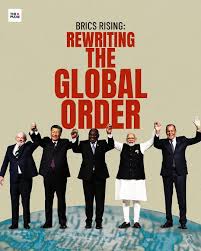
Kiyosaki points to the growing influence of BRICS, a group of emerging economies that includes:
BRICS stands for:
B – Brazil
R – Russia
I – India
C – China
S – South Africa
Together, these countries formed an economic and geopolitical bloc aimed at promoting cooperation among major emerging economies and reducing dependence on Western-dominated financial systems.
Current expanded BRICS members include:
Brazil, Russia, India, China, South Africa, Egypt, Ethiopia, Iran, Indonesia, United Arab Emirates, and Saudi Arabia.
In simple terms, BRICS is a group of fast-growing economies working together to increase trade, financial independence, and global influence.
Together, these 11 countries represent:
- A large share of global population
- Major energy producers
- Major commodity and gold holders
🔄 How BRICS Is Challenging the Dollar
According to Kiyosaki:
- BRICS nations now conduct around 50% of their internal trade in local currencies
- Russia–China trade reportedly uses 90% rubles and yuan
- China has built dollar-independent financial infrastructure
- Countries are trying to reduce reliance on the dollar — a process called de-dollarisation
👉 In short: Countries are trading with each other without using the US dollar.
🪙 Why Gold Is Becoming Important Again
Another major signal Kiyosaki highlights is gold accumulation.
Central banks across the world are:
- Buying gold aggressively
- Reducing exposure to US dollar reserves
Key gold trends :
| Indicator | What It Shows |
|---|---|
| Central banks buying ~70 tonnes/month | Strong move away from dollar |
| BRICS control ~50% of global gold production | Real asset power |
| BRICS hold 6,000+ tonnes of gold | Reserve diversification |
| China & Russia | Among largest gold miners |
Gold is seen as money without political risk, unlike fiat currencies.
📉 The Dollar Is Already Showing Weakness
In 2025:
- The US Dollar Index fell about 9.4%
- This was its biggest decline in eight years
For Kiyosaki, this is not a coincidence — it’s a symptom of structural change.
⚠️ Why Kiyosaki Warns US Savers the Most
Kiyosaki’s biggest warning is not about governments — it’s about people.
He argues:
- If the dollar loses reserve status
- Trillions of dollars held overseas may flow back into the US
- This would sharply increase money supply
- Purchasing power of savings would erode
📌 He compares this to what happened when the British pound lost reserve status, leading to long-term decline in real wealth for savers.
“Most people will keep their savings in dollars and watch their wealth evaporate.”
🛢️ The Petrodollar Story: How the Dollar Stayed Dominant
Kiyosaki also explains how the dollar system was historically protected.
Two historical examples he cites:
| Year | Event | Outcome |
|---|---|---|
| 2000 | Iraq priced oil in euros | US invaded Iraq (2003); oil returned to dollars |
| 2009 | Libya proposed gold-backed African currency | NATO intervened (2011); plan disappeared |
According to Kiyosaki, these events show how challenging the dollar system had serious consequences.
But he believes this pattern is now breaking, because:
- Many countries are moving together
- Military force cannot stop dozens of nations at once
- Economic alliances are becoming stronger
🌐 Why This Time Is Different
Kiyosaki argues that earlier, countries challenged the dollar alone.
Now, entire blocs are doing it together.
- Trade is being settled outside the dollar
- Gold is replacing paper reserves
- Energy trade is slowly diversifying
- Technology allows alternatives
This makes the shift harder to stop.
🧭 What This Means for the World
- The dollar may remain important, but not unchallenged
- The world may move toward a multi-currency system
- Gold and commodities gain importance
- Savers need awareness, not panic
This is not about the dollar “dying overnight” — it’s about losing monopoly power over time.
Robert Kiyosaki’s message is not fear — it’s a warning.
History shows that:
- No reserve currency lasts forever
- Power shifts slowly, then suddenly
- Savers suffer when they ignore change
The rise of BRICS, gold accumulation, and local-currency trade signals that the global financial system is evolving.
🌱 Final Thought
“Currencies come and go, but real value always finds a way to survive.”
Understanding these shifts helps us appreciate the system we live in, question what we assume will last forever, and make wiser decisions for the future — with knowledge, not fear.