

Blockchain is not just about cryptocurrency. It is like a digital notebook where data is written in a way that cannot be changed or deleted. Because of this, blockchain is being used in many industries to improve trust, security, and transparency.
🔹 Introduction
Blockchain use cases mean how and where blockchain is applied in real life.
It is like saying – “This new tool is useful for these jobs.”
Blockchain is especially powerful in:
- Managing Records
- Healthcare
- Finance
📑 Records Management
What it is:
Record management means storing and protecting important documents like property papers, certificates, or government data.
Why Blockchain?
- Records cannot be changed or faked once saved on blockchain.
- Everyone can verify ownership easily.
- Removes corruption or fraud in land/property deals.
Example:
In some states of India, land ownership records are being tested on blockchain so no one can illegally grab land by changing documents.
Pros: Transparency, trust, no tampering.
Cons: Needs government support, and system setup cost is high.
🏥 Healthcare Records Management
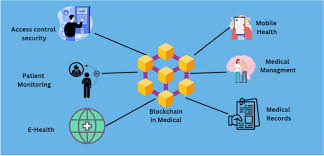
What it is:
Hospitals and doctors store patient medical reports, prescriptions, and test results.
Why Blockchain?
- Keeps health records private and safe.
- Patients can share reports with any doctor without re-doing tests.
- Reduces fake medicine reports or data theft.
Example:
If a patient travels abroad, instead of carrying files, their health records can be accessed securely via blockchain by the doctor.
Pros: Privacy, efficiency, less paperwork.
Cons: Needs strong data privacy laws and doctor training.
💰 Finance
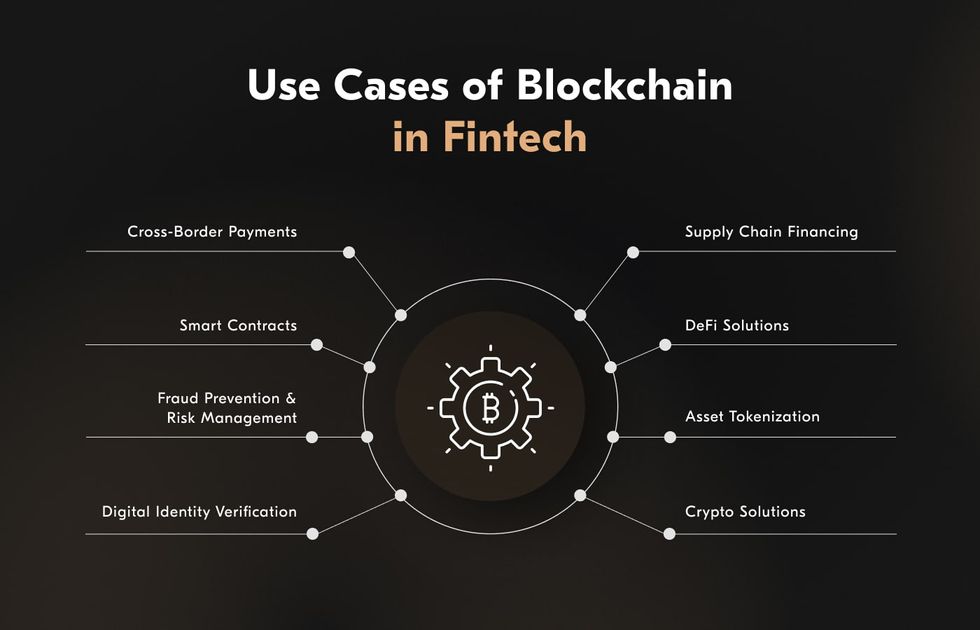
What it is:
The financial industry includes banks, payments, and investments.
Why Blockchain?
- Sends money directly peer-to-peer (P2P) without middlemen.
- Reduces transaction costs and makes transfers faster.
- Improves trust in cross-border payments.
Example:
Cryptos like Bitcoin, Ethereum, and Beldex are blockchain-based.
Banks like JP Morgan are building their own blockchain systems for money transfers.
Pros: Fast, low-cost, transparent.
Cons: Some countries (like India) still have unclear regulations.
📖 Technical Words Explained
- Immutable: Data once written cannot be changed.
- Decentralized: No single boss; everyone shares control.
- Smart Contract: A digital agreement that runs automatically on blockchain.
- Ledger: A digital notebook of transactions.
A comparison table would make the information much more digestible and visually appealing, especially for readers who want a quick overview. You could structure it like this:
| Use Case | Why It’s Used | Benefits | Cons / Challenges |
|---|---|---|---|
| Managing Records | To create tamper-proof, transparent, and auditable records | Secure, immutable, reduces errors, easy verification | Can be expensive to implement, requires digital literacy |
| Healthcare | To securely share patient data among providers | Improved data accuracy, patient privacy, faster access to medical history | Data privacy concerns, regulatory compliance, integration complexity |
| Finance | For secure transactions, fraud reduction, and efficient settlements | Transparency, faster processing, lower fraud risk | High energy costs for some blockchains, regulatory uncertainty |
You could even add a real-life example column to make it more engaging. For instance:
| Use Case | Real-Life Example | Why It’s Used | Benefits | Cons / Challenges |
|---|---|---|---|---|
| Healthcare | Medicalchain, Patientory | Secure sharing of patient records | Accurate, fast, privacy-respecting | Compliance complexi |
💡 Opinion
Blockchain is like a trust machine. In a world full of scams, fraud, and hidden charges, it creates honesty by design.
It will not replace every system, but in areas like healthcare, land records, and finance, it will bring huge relief for individuals and businesses.
For more click this : https://n-k.co.in/chapter-5-consortium-hybrid-blockchain-balancing-trust-and-control/