

As the financial year approaches, understanding Capital Gains is very important for smart tax planning and wealth creation.
If you invest in property, gold, shares, or mutual funds — capital gain directly affects your profit and your tax.
Let’s understand it in a very simple and practical way.
What is Capital Gain?
Capital Gain = Profit earned from selling an asset at a higher price than you bought it.
👉 If you buy something for ₹1 lakh and sell it for ₹1.5 lakh,
👉 Your capital gain = ₹50,000 (profit).
This profit is taxable under the Income Tax Act, 1961.
Where is Capital Gain Used?
Capital gain applies when you sell:
- Property (house, land, flat)
- Shares
- Mutual funds
- Gold
- Bonds
- Commercial assets
If you don’t sell the asset, there is no capital gain tax.
Tax applies only when you sell and make profit.
Types of Capital Gain in India
| Type | Holding Period | Tax Meaning |
|---|---|---|
| Short-Term Capital Gain (STCG) | Sold within short duration | Higher tax rate |
| Long-Term Capital Gain (LTCG) | Held for longer period | Lower tax rate |
Holding period depends on asset type.
Capital Gain on Shares
For equity shares:
- STCG: Sold within 1 year → Tax approx 15% (subject to updates)
- LTCG: Sold after 1 year → 10% tax above ₹1 lakh profit
Example:
You bought shares at ₹2 lakh and sold at ₹3.5 lakh after 2 years.
Profit = ₹1.5 lakh
Taxable LTCG = ₹50,000 (₹1.5L – ₹1L exemption)
2️⃣ Capital Gain on Property
For property:
- STCG: Sold within 2 years → Tax as per income slab
- LTCG: Sold after 2 years → 20% with indexation benefit (as per existing structure)
Indexation helps reduce tax by adjusting purchase price with inflation.
Example:
Bought house at ₹30 lakh
Sold at ₹50 lakh after 5 years
Capital gain calculated after indexation → lower tax payable.
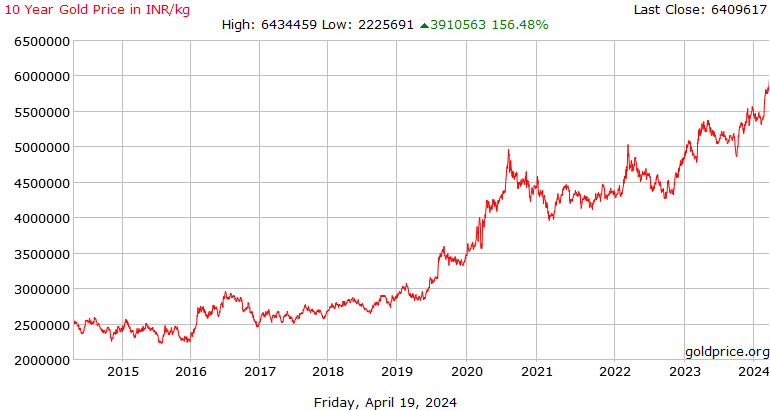
Capital Gain on Gold
4
- STCG: Sold within 3 years → Slab rate
- LTCG: Sold after 3 years → 20% with indexation
Why is Capital Gain Necessary?
Capital gain tax is important because:
✔ It ensures fair taxation on profits
✔ It prevents misuse of asset flipping
✔ It generates government revenue
✔ It promotes long-term investment
✔ It stabilizes financial markets
Without capital gain rules, investors may create speculative bubbles.
Where is Capital Gain Used in Real Life?
- Property resale profits
- Share market trading
- Mutual fund redemption
- Business asset sale
- Startup exits
Whenever wealth is created through asset appreciation, capital gain applies.
Latest Updates by Indian Government (Recent Structure)
Note: Always check latest budget announcements for exact rates.
Recent trends and updates include:
• Changes in holding period for debt mutual funds
• Removal of indexation benefits for certain debt funds (taxed as per slab in many cases)
• Simplified capital gain structure proposals under new tax regime
• Digital reporting & AIS (Annual Information Statement) monitoring
The government is focusing on:
- Transparency
- Simplification
- Digital compliance
How to Save Capital Gain Tax (Legal Ways)
✔ Invest in new property under Section 54
✔ Invest in Capital Gain Bonds (54EC)
✔ Use ₹1 lakh LTCG exemption for equity
✔ Plan sale timing smartly
✔ Offset capital losses
Smart planning = Less tax burden.
Capital Gain is Not Just Tax — It’s Wealth Growth
Capital gain means your investment has grown.
Instead of fearing tax, focus on:
- Long-term investing
- Asset allocation
- Smart reinvestment
- Proper documentation
Understanding capital gain helps you:
✔ Make better investment decisions
✔ Plan tax efficiently
✔ Grow wealth legally
✔ Avoid penalties
As this financial year approaches, review your investments and plan smartly.