
“Profit is good — but understanding how it’s taxed is smarter.”
If you invest in cryptocurrency and sell it at a profit, that profit is called capital gain.
Just like shares, property, or gold — crypto profits are taxed in many countries.
Let’s understand capital gains on cryptocurrency in a simple, practical way with real examples.
What Is Capital Gain?
A capital gain is the profit you earn when you sell something for more than you paid for it. The “capital” refers to the asset you invested in — such as property, gold, stocks, or cryptocurrency — and the “gain” is the extra amount you receive above your original purchase price.
In simple terms, capital gain is the difference between the buying price and the selling price of an asset. If you buy an asset at a lower price and later sell it at a higher price, the profit you make is called a capital gain. If you sell it for less than you bought it, that is called a capital loss.
For example, if you buy shares for ₹50,000 and later sell them for ₹70,000, your capital gain is ₹20,000. That ₹20,000 is your actual profit. Similarly, if you purchase Bitcoin for ₹5,00,000 and sell it at ₹6,50,000, the ₹1,50,000 difference is your capital gain.
Capital gains are important because in many countries, including India, governments tax this profit. However, the tax usually applies only when the asset is sold or exchanged — this is called a “realized gain.” If the asset’s value increases but you have not sold it yet, that increase is called an “unrealized gain,” and it is generally not taxed until you sell.
In short:
👉 Capital gain = Selling price – Purchase price
👉 It represents your investment profit
👉 It becomes taxable when you sell or exchange the asset
Understanding capital gains helps you make smarter investment decisions and stay financially responsible
Simple Definition:
A capital gain is the profit you earn when you sell an asset for more than you bought it.
Formula:
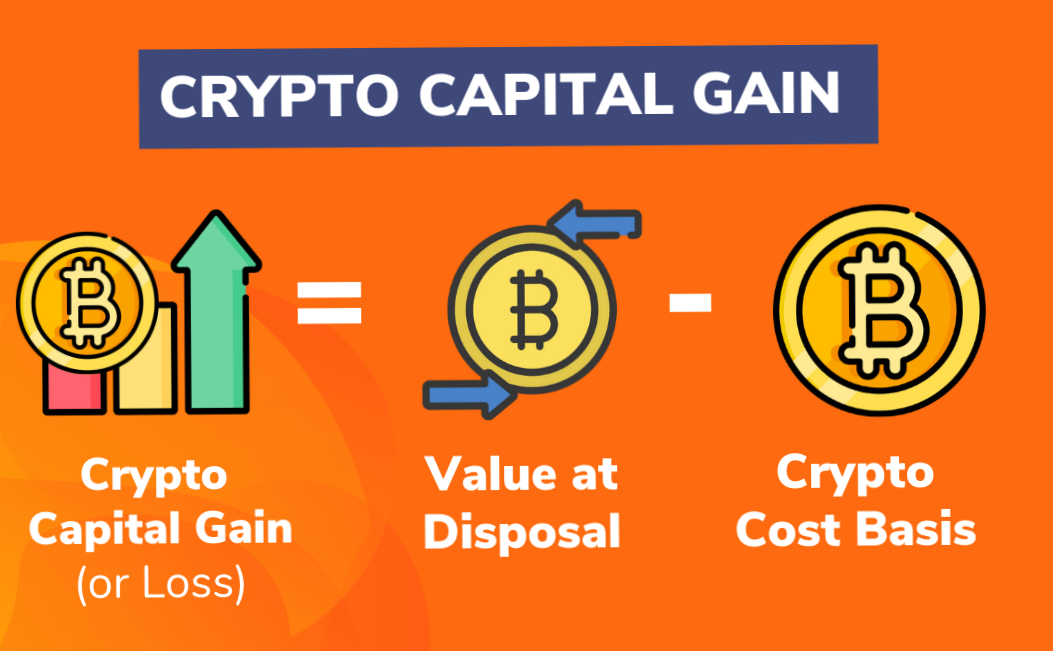
Capital Gain = Selling Price – Purchase Price
If you sell for less than you bought:
That is called Capital Loss.
How Capital Gains Work in Cryptocurrency
Capital gains in cryptocurrency happen when you sell or exchange your crypto for a higher value than what you originally paid for it. The moment you “realize” a profit — meaning you convert it into cash, swap it for another coin, or use it to purchase something — the difference between your buying price and selling price becomes your capital gain. This gain is considered income in many countries and may be taxable.
For example, if you bought Bitcoin at ₹10,00,000 and later sold it at ₹12,00,000, your capital gain is ₹2,00,000. That ₹2,00,000 is the profit portion, and tax (if applicable in your country) is calculated only on that amount — not on the full ₹12,00,000. Even if you do not convert to cash and instead swap Bitcoin for Ethereum when its value increased, the profit made at the time of swapping is still considered a realized capital gain in most tax systems.
It’s important to understand that buying crypto and holding it does not create capital gains immediately. Tax usually applies only when you sell, trade, or use the asset. If the value goes up but you don’t sell, that is called an “unrealized gain,” and it typically isn’t taxed until you actually dispose of the asset.
In simple words:
👉 Buy low
👉 Sell higher
👉 The difference is your capital gain
👉 That profit may be taxable
Tracking your purchase price, selling price, and transaction dates is very important because accurate records help you calculate the exact gain and stay compliant with tax regulations.
When you:
✔ Sell crypto for cash
✔ Swap one crypto for another
✔ Use crypto to buy goods/services
It may trigger a taxable event.
Even if you:
- Convert Bitcoin to USDT
- Swap ETH for BNB
That counts as selling one asset and buying another.
Example 1 – Simple Profit Example
You buy:
1 Bitcoin at ₹20,00,000
Later you sell it at:
₹25,00,000
Capital Gain:
₹25,00,000 – ₹20,00,000 = ₹5,00,000 profit
This ₹5,00,000 is your capital gain.
You may need to pay tax on this amount.
Example 2 – Crypto-to-Crypto Trade
You buy Ethereum at ₹1,00,000
Later you convert it into BNB when ETH value becomes ₹1,40,000
Even if you didn’t withdraw cash,
Your capital gain is:
₹1,40,000 – ₹1,00,000 = ₹40,000
That ₹40,000 may be taxable.
Where Capital Gains Apply
Most countries treat cryptocurrency as:
- A digital asset
- Property
- Virtual digital asset (VDA)
So capital gains tax rules apply similar to:
- Stocks
- Mutual funds
- Gold
- Real estate
Capital Gains on Crypto in India
In India:
✔ 30% tax on crypto profit
✔ 1% TDS on transactions
✔ No deduction for losses (except in limited cases)
Example (India):
You make ₹1,00,000 profit in crypto.
Tax:
30% of ₹1,00,000 = ₹30,000 tax
Plus surcharge & cess if applicable.
Short-Term vs Long-Term Capital Gains
In many countries:
| Type | Meaning |
|---|---|
| Short-Term | Asset held for shorter period |
| Long-Term | Asset held for longer period |
Long-term gains often have lower tax in some countries (not currently in India for crypto).
When Capital Gains DO NOT Apply
If you:
✔ Only buy and hold
✔ Do not sell
✔ Do not swap
Then capital gains tax is usually not triggered yet.
Tax applies only when:
👉 You realize profit.
Why Capital Gains Tax Exists
Governments apply capital gains tax to:
- Track income from investments
- Prevent tax evasion
- Maintain financial transparency
Crypto is no longer invisible.
Governments worldwide monitor transactions.
Why You Should Track Capital Gains
If you invest in crypto, you should:
✔ Maintain transaction history
✔ Track buy and sell price
✔ Calculate gains properly
✔ File taxes correctly
Ignoring capital gains can:
❌ Create legal trouble
❌ Cause penalties
❌ Lead to account freezes
Practical Tip
Keep a simple record:
| Date | Coin | Buy Price | Sell Price | Profit |
|---|
This makes tax filing easier.
Final Thought
“Making profit is smart. Reporting profit is responsible.”
Crypto is the future — but responsibility builds sustainability.
Understanding capital gains:
✔ Protects you legally
✔ Keeps you compliant
✔ Helps you invest confidently