
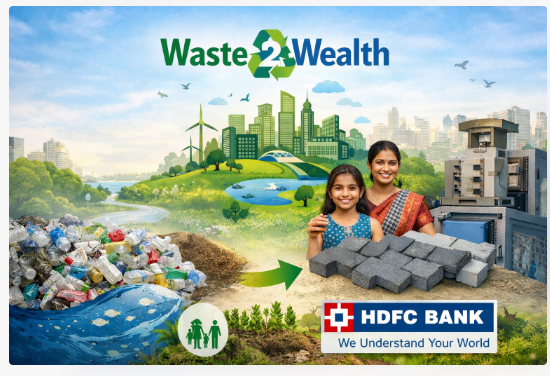
“Transforming waste into wealth is not just an environmental imperative — it’s India’s invitation to build a greener, more prosperous future.”
India is at a critical moment in history. We are facing the burden of legacy plastic waste — non-recyclable plastics that pile up in landfills, pollute our soil, water, and air, and threaten the health of our children and future generations. Globally, only around 9% of plastic ever gets recycled, leaving the rest to pollute our environment.
Yet, there is hope — and hope needs action, unity, innovation, and funding.
At the heart of India’s sustainable future is the vision expressed by Prime Minister Narendra Modi:
“On one hand, we have banned single-use plastic while on the other hand, plastic waste processing has been made mandatory.”
His words remind us that policy alone isn’t enough — we must act together to turn plastic into prosperity and protect our clean air, water, and soil.
📊 The Problem: Plastic Pollution in India — A National Crisis
| Impact | What It Means |
|---|---|
| Air Pollution | Burning plastics releases toxic gases, worsening respiratory diseases and climate change. |
| Water Pollution | Rivers and oceans carry microplastics to drinking water and food sources. |
| Soil Degradation | Plastic chemicals reduce fertility and endanger agriculture. |
| Health Risks | Chemicals from plastics enter the human body through food and water, risking long-term illnesses. |
| Economic Burden | Massive cleanup costs and loss of usable land near cities and rural areas. |
Our environment is at risk, and people — especially children — are breathing polluted air and consuming contaminated water because of plastic mismanagement.
🌍 PM Modi’s Waste2Wealth Vision
Prime Minister Narendra Modi’s Waste2Wealth initiative highlights:
- The economic value of effective waste management.
- Plastic as a resource rather than refuse.
- Opportunities for clean enterprises and jobs in recycling, reprocessing, and upcycling sectors.
The initiative creates pathways to convert plastic waste into:
- Value-added raw materials
- Products such as construction materials, furniture, textiles
- Jobs and enterprises for local communities
This vision aligns with sustainable development goals (SDGs) and In
🔍 HDFC Bank’s CSR Journey: Parivartan Program
HDFC Bank Parivartan CSR Report 2024‑25 Highlights
HDFC Bank, one of India’s leading private sector banks, has spent ₹1,068.03 crore on CSR initiatives in the financial year 2024-25, marking a significant rise from previous years.
Under its flagship Parivartan CSR programme — which means “Change” — the bank has reached over 10.56 crore lives across 28 states and 8 Union Territories. Projects have been implemented in over 102 of the 112 Aspirational Districts identified by the Government of India.
Key Focus Areas of Parivartan Today
| Area | Focus |
|---|---|
| Rural Development | Infrastructure, water, sanitation, natural resource management |
| Education | Scholarships, digital learning, school support |
| Skill Development | Vocational training, livelihood support |
| Healthcare & Hygiene | Medical facilities, public health projects |
| Financial Literacy | Inclusion and economic empowerment |
| Environment | Natural resource conservation & sustainable practices |
The programme has become a pillar of community empowerment and environmental responsibility in India.
🧩 Why Parivartan Should Back Waste2Wealth
📌 1. Environmental Sustainability
Parivartan already funds natural resource management and environmental protection. Extending this to plastic recycling ecosystems — such as waste collection networks, micro recycling units, and community enterprises — fits perfectly.
📌 2. Skill Training & Livelihood Linkage
HDFC Bank’s CSR invests heavily in skill training and livelihood projects that help youth and women gain employability — a theme central to Waste2Wealth. Training workers in recycling technologies, material sorting, entrepreneurship, and value-added plastic product manufacturing would empower local communities.
📌 3. Rural & Urban Impact
Countries like India struggle with plastic leakage into water bodies and landfills. Parivartan’s rural development programmes, combined with Waste2Wealth mission, can create eco-clusters where urban waste is monetized, creating jobs and cleaner environments.
📌 4. Women & Youth Empowerment
Women and young people can be trained as plastic collection leaders, small-enterprise owners, repair technicians, and eco-entrepreneurs, creating social uplift and financial independence — a key CSR outcome.
📌 Possible CSR Funding Pathways
Here are ways HDFC Bank’s CSR can be strategically applied to Waste2Wealth:
🟢 1. Skill & Training Hubs
Set up local centres to train:
- Plastic sorting and grading
- Recycling machine operation
- Product design using recycled materials
- Business and sales skills
This aligns with Parivartan’s livelihood focus.
🟢 2. Micro Recycling Units
Fund micro recycling and upcycling centres in:
- Tier-2 & Tier-3 cities
- Aspirational Districts
- Rural clusters
These units can convert waste into marketable products.
🟢 3. Women-Centric Enterprises
Training SHGs (Self-Help Groups) in:
- Crafting recycled goods
- Supply chain partnering
- Brand building for eco products
Empowerment plus economic development.
🟢 4. Awareness & Collection Campaigns
Running large-scale campaigns to educate communities about:
- Separating waste at source
- Plastic reuse and recycling
- Plastic poverty reduction
🌱 Waste2Wealth: A Homegrown Solution for Plastic Pollution
Now imagine if CSR funding could also be used to solve India’s plastic crisis.
That’s the bridge between HDFC Bank’s Parivartan and the Waste2Wealth solution pioneered by Jagruth Tech Pvt. Ltd.
🌿 Our Solution — Repurposing Non-Recyclable Plastic
| Feature | Description |
|---|---|
| Technology | Patented process converting non-recyclable, multi-layer plastics into useful building materials |
| Outputs | Interlocking tiles, paver blocks, benches, carbon-negative products |
| Environmental Impact | Reduces landfill waste, prevents microplastic pollution |
| Economic Value | Generates revenue via EPR credits and product sales |
| Social Benefit | Jobs for local waste workers and new industries in communities |
This is not just recycling — it is upcycling waste into wealth, creating jobs, cleaner environments, and carbon-negative products that help cities modernise sustainably.
When certified processors like Mysuru City Corporation (MCC) and Jagruth Tech process plastic waste responsibly, they earn EPR credits — digital compliance credits that can be sold to companies that need them under India’s Extended Producer Responsibility rules. In simple terms: Less pollution = More revenue.
💡 Why HDFC Bank Should Support Waste2Wealth Through CSR Funding
HDFC Bank’s Parivartan programme already focuses on environmental sustainability and community development. Using part of CSR funds to support Waste2Wealth initiatives would:
✨ Extend Parivartan’s Impact
The programme currently touches millions — adding plastic transformation would scale environmental change alongside rural development and education.
✨ Protect Human Health
Reducing plastic pollution preserves clean air and safe water — critical for reducing diseases and building healthy communities.
✨ Create Sustainable Jobs
Local waste collection, processing and manufacturing units can become employment hubs under CSR funding.
✨ Align with National Vision
This aligns with PM Modi’s vision of a green and prosperous future by turning waste into value.
📌 CSR Success Models That Can Be Emulated
- Skill training models under Parivartan have enabled 7.2 lakh individuals to gain livelihoods.
- Education programmes have provided 29,000+ scholarships and 2,600+ SMART schools.
By adding waste management and recycling to this portfolio, HDFC Bank can influence a new frontier in sustainability.
❤️ A Call to Action: Let’s Build a Healthy India for Our Children
The fight against plastic is not just ecological — it’s a human mission. Cleaner water means safer drinking water. Cleaner air means healthier lungs for our children. Cleaner soil means better food for future generations.
We are here to help you — just ask.
Let’s come together — government, banks, innovators, and citizens — to make India free of legacy plastic, free of poisoned water, and full of sustainable opportunity.
HDFC Bank’s commitment to social good through CSR is already transforming lives — now imagine the impact if CSR funds are channelled into Waste2Wealth solutions that protect our environment and empower our communities.
Because when we help the environment thrive — India thrives with it.
🚀Opinion
HDFC Bank’s CSR story is already one of scale, reach, and impact. Its evolving Parivartan platform is now well-positioned to champion Waste2Wealth initiatives — turning plastic from an environmental hazard into a source of wealth, jobs, and sustainable enterprise.
“When institutions deploy their resources with purpose, waste becomes wealth, communities become empowered, and sustainability becomes reality.”