
The Reality: Ending India’s Plastic Problem for Clean Air, Water & Soil
India generates millions of tonnes of plastic waste every year. Some of it is recycled — but most ends up in landfills, rivers, oceans, and even our food chain.
Across the world, only 9% of plastic ever gets recycled; the rest becomes legacy plastic, lying in dump yards for decades and slowly poisoning our planet.
Our soil, water, and air are silently suffering. Burning plastics release toxic gases; plastics in soil damage fertility; and when they reach rivers, they contaminate groundwater and oceans.
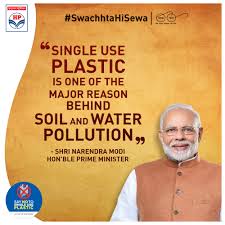
As Prime Minister Narendra Modi said on World Environment Day, 5 June 2023:
“On one hand, we have banned single-use plastic while on the other hand, plastic waste processing has been made mandatory.”
He also reminded the world that India’s fight against plastic pollution is not just national — it’s global.
Every citizen, every business, and every government body must work together to protect our planet’s future.
⚠️ The Problem: How Plastic Is Harming India
| Impact Area | How Plastic Waste Affects India |
|---|---|
| Air Pollution | Burning plastic releases CO₂ and toxic gases that harm lungs and contribute to climate change. |
| Water Pollution | Plastic leaks into rivers and seas, contaminating drinking water and marine life. |
| Soil Pollution | Microplastics mix with soil, reducing fertility and affecting crop yields. |
| Health | Plastic toxins enter the food chain — microplastics have been found in human blood and organs. |
| Economy | Crores spent on waste cleanup; dump yards occupy valuable land and harm tourism and agriculture. |
Across every state — from Maharashtra to Tamil Nadu, Karnataka to Assam — dump yards are overflowing with non-recyclable, multi-layer plastics that traditional recycling cannot handle.
This is not just an environmental issue — it’s a national crisis.
♻️ The Hope: Turning Non-Recyclable Plastic into a Sustainable Resource
But there’s good news. India already has a homegrown, patented solution — developed and proven by Bharatiyulam.
🌿 Waste2Wealth — Innovation That Works
In partnership with Mysuru City Corporation (MCC), technical partners has pioneered a process that converts Category-3 (multi-layer, non-recyclable) plastic waste into reusable, eco-friendly building materials like interlocking tiles and bricks.
| Aspect | Details |
|---|---|
| Project Partner | Mysuru City Corporation (MCC) |
| Technology | Patented, internationally recognized process |
| Plastic Processed | 275 tonnes of Category 3 plastic |
| Output | Durable paver blocks and tiles — carbon-negative products |
| Revenue Generated | ₹2.6 lakh through EPR credits |
| Corporate Partner | Nestlé India under CPCB-certified EPR program |
| Outcome | Less pollution, more revenue, and a cleaner Mysuru |
This is a proven Waste2Wealth model — already running successfully and generating income for both government and industry.
💰 What Are EPR Credits and Why They Matter
EPR (Extended Producer Responsibility) is a law that makes manufacturers, importers, and brand owners responsible for the plastic they put into the market.
When processors like Jagruth Tech recycle waste responsibly, they earn EPR credits — digital certificates that companies can purchase to meet their legal obligations under India’s Plastic Waste Management Rules (2016, amended 2022).
👉 In simple words:
Less pollution = More revenue + National compliance + Cleaner environment.
🇮🇳 The National Need: Every District, Every State
This innovation isn’t just for Mysuru — it’s for every city, every district, and every state in India.
From Delhi’s overfilled landfills to coastal states battling ocean plastic, each region needs a scalable Waste2Wealth solution.
With PM Modi’s leadership, India has already banned single-use plastics and strengthened EPR enforcement through the Central Pollution Control Board (CPCB).
Now it’s time to implement local solutions that align with this vision — solutions like Bharatiyulam Partners, which combine technology, social impact, and revenue generation.
🌱 The Benefits: For India, the Government, and Every Citizen
| Area | How India Gains |
|---|---|
| Environment | Drastic reduction in landfill waste, cleaner rivers and air, restored soil health. |
| Government Revenue | Municipalities earn through EPR credits and sale of upcycled products. |
| Employment | Local jobs for waste collectors, plant operators, and craftsmen. |
| Health & Society | Cleaner surroundings, reduced disease, safer food and water. |
| Sustainability Goals | Supports Swachh Bharat Mission and Net-Zero India 2070 vision. |
💬 A Message of Hope
Prime Minister Modi often says,
“When the people of India unite, the impossible becomes possible.”
That spirit drives Us being Global Green Evangelists.
We are proud to contribute to Atmanirbhar Bharat by turning one of India’s biggest problems — non-recyclable plastic — into an opportunity for growth and sustainability.
🤝 Let’s Build a Cleaner Future, Together
This is our time to act.
If every municipality adopts Waste2Wealth, India can eliminate legacy plastic waste, clean its air and water, and create thousands of green jobs.
Let’s join hands with PM Narendra Modi’s vision — for a cleaner, greener, and wealthier India.
💖 My Opinion — A Breath of Pure Hope for Our Future
I often ask myself — how can our air be pure to breathe again?
How can we make sure our children grow up in a cancer-free environment, where the air is clean, the water is safe, and the soil is alive — not poisoned by plastic and waste?
The answer lies in taking action today — by embracing innovation, responsibility, and care for our planet.
India deserves a future where waste becomes wealth, where technology protects nature, and where every citizen becomes a part of change.
We, are not just offering a solution — we are offering hope.
A sustainable, proven way to clean our cities, revive our environment, and build a stronger, greener India.
So I invite you — Just ask me.
Let’s talk about how together we can make your city cleaner, your community healthier, and your tomorrow brighter.
Because when we protect our air, water, and soil, we protect life itself.