
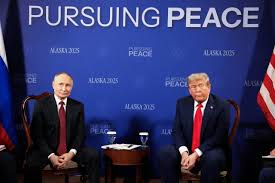
When news emerged that the United States was pushing forward with Russia–Ukraine peace talks without fully involving European Union (EU) countries, it created serious unease across Europe.
The concern is not political ego — it’s about security, money, and power, all deeply connected.
So the big question is:
👉 Why can’t US President Donald Trump simply bypass EU countries in the Russia–Ukraine peace deal?
Let’s break it down clearly and simply.
🕊️ The Background: What’s Happening?
After a meeting between American and Ukrainian representatives in Miami on November 30, 2025, reports suggested that the US was pushing peace negotiations forward without adequately addressing EU interests in ending the Russia–Ukraine war.
This alarmed European countries because:
- Ukraine’s future directly affects Europe’s borders
- Any land loss by Ukraine could threaten EU security
- Europe has been economically and militarily invested from day one
🧩 Who Are the Real Players in the Peace Deal?
Market expert Sandeep Pandey explains this using two simple ideas: de jure and de facto players.
🔍 De Jure vs De Facto Players
| Type | Who They Are | Why They Matter |
|---|---|---|
| De jure (direct players) | Russia, Ukraine, EU | They are directly affected on the ground |
| De facto (indirect player) | United States | Involved due to NATO and global power role |
The EU is considered a direct stakeholder because instability in Ukraine directly threatens European nations.
The US, while powerful, is involved mainly because of its leadership role in NATO — not because it shares borders with Ukraine.
⚠️ Why EU Countries Are Uneasy with Trump’s Approach
EU nations fear that if Trump moves unilaterally:
- Their security concerns may be ignored
- Long-term European stability could be compromised
- They may be forced to accept outcomes that hurt them
Experts say this concern is justified, because peace terms decided without EU input could reshape Europe’s geopolitical future.
💰 The EU’s Real Power: Financial Leverage Over the US
Here’s the most critical part — money.
EU countries (along with the UK) hold a massive amount of US government debt.
📊 US Treasuries Held by Europe (as of Dec 2024)
| Holder | US Treasuries |
|---|---|
| United Kingdom | $722.7 billion |
| EU member states (combined) | $1.62 trillion |
| Total EU + UK | $2.34 trillion |
This makes Europe one of the largest foreign holders of US debt.
🚨 What Happens If the EU Uses This Leverage?
According to Anuj Gupta, Director at Ya Wealth, if EU countries sell US Treasuries in a coordinated way:
- Demand for US bonds will fall
- US Treasury yields will rise sharply
- US borrowing costs will increase
- Pressure on the US dollar will intensify
- Other global investors may panic and sell
🛑 This could trigger a financial shock larger than the 2008 Lehman Brothers crisis.
At a time when the US is already facing:
- Rising debt
- Treasury yields jumping from ~2% to over 5%
…the US economy cannot afford such a hit.
🔄 Is Trump Ignoring the EU Completely? Not Really
Experts believe Trump’s strategy is more of a bargaining tactic.
🧠 What Trump May Be Doing
- Keeping talks limited at the initial stage
- Trying to reach a basic Russia–Ukraine consensus first
- Planning to involve EU and NATO later
Because this peace process is expected to be long and complex, all players — EU, US, Russia, Ukraine — are strategically playing their cards.
🔗 Why Trump Ultimately Cannot Ignore the EU
In simple words:
- The EU is too close geographically
- Too exposed economically
- Too powerful financially
- Too critical to NATO’s unity
If the EU is sidelined, it could:
- Trigger economic retaliation
- Destabilize global markets
- Weaken Western alliances
That’s why experts agree:
👉 Trump has no real option but to address EU concerns in the final peace deal.
🌐 The Bigger Lesson: Global Power Is Interconnected
This situation shows how:
- Politics and economics are deeply linked
- Wars are not just fought with weapons, but with money
- Financial leverage can be as powerful as military force
In today’s world, no major peace deal can succeed without aligning all key stakeholders.’
“In today’s world, peace is negotiated with diplomacy, sustained by economics, and enforced by leverage — not by one country alone”