
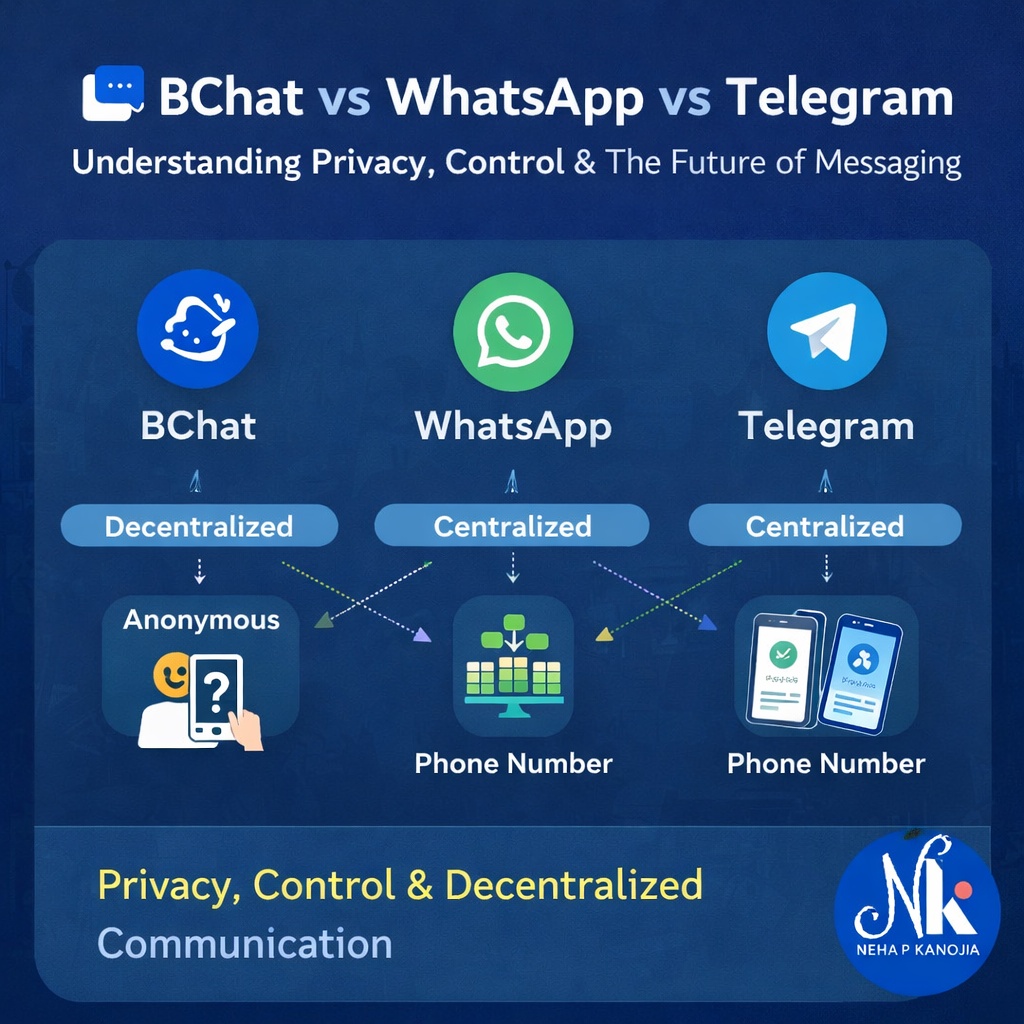
Understanding Privacy, Control, and the Future of Messaging
Messaging apps have become an essential part of our daily life. From personal conversations to business communication, billions of people rely on apps like WhatsApp and Telegram every day.
But as digital communication grows, so do concerns about privacy, data tracking, and centralized control.
This is where BChat, a decentralized messaging platform built within the Beldex ecosystem, offers a different approach.
Let’s explore how BChat compares with WhatsApp and Telegram, and why privacy-focused messaging is gaining attention.
The Three Messaging Platforms
Before comparing them, let’s briefly understand what each platform represents.
WhatsApp
Owned by Meta (Facebook), WhatsApp is one of the most widely used messaging apps in the world. It offers end-to-end encryption but is still part of a centralized company ecosystem.
Telegram
Telegram is known for large groups, channels, and fast communication. While it offers some privacy features, its default chats are not fully end-to-end encrypted.
BChat
BChat is a decentralized messaging application designed with privacy as its core principle. It runs on a distributed network and aims to minimize data collection and centralized control.
Key Differences at a Glance
| Feature | BChat | Telegram | |
|---|---|---|---|
| Ownership | Decentralized network | Owned by Meta | Centralized company |
| Data Collection | Minimal | Metadata collected | Some metadata collected |
| Phone Number Required | No | Yes | Yes |
| Privacy Focus | Very high | Moderate | Moderate |
| Servers | Distributed nodes | Central servers | Central servers |
| Identity | Anonymous possible | Linked to phone number | Linked to phone number |
| Censorship Resistance | Higher | Limited | Limited |
Privacy: The Biggest Difference
The biggest difference between these platforms is how they handle privacy and user identity.
WhatsApp encrypts messages, which protects conversations. However:
• Accounts are linked to phone numbers
• Metadata can still be collected
• The platform is owned by a large tech company
This means communication is private, but user identity and data relationships can still be tracked.
Telegram
Telegram offers advanced features such as channels, bots, and large communities.
However:
• Regular chats are stored on Telegram servers
• End-to-end encryption is only available in secret chats
• Phone numbers are still required
Telegram focuses more on speed and functionality rather than maximum privacy.
BChat
BChat approaches messaging differently.
Instead of relying on centralized servers, it uses a distributed node network.
Key privacy advantages:
• No phone number required
• No centralized servers storing messages
• Minimal data collection
• Greater resistance to censorship
This design focuses on protecting both conversation content and user identity.
Example to Understand the Difference
Imagine three ways of having a conversation.
WhatsApp Scenario
You talk in a private room where no one can hear the conversation.
But the building owner knows:
• Who entered the room
• When you entered
• Who you met
Telegram Scenario
You talk in a private room in a large building with many communication tools available.
But the building still keeps some records of activity.
BChat Scenario
You meet someone in a park with no central building controlling the space.
Your conversation remains private, and there is no central authority recording who met whom.
Why Decentralized Messaging Is Growing
As digital communication expands, many people are becoming more aware of how their data is handled.
Concerns include:
• Data tracking
• Centralized platform control
• Potential censorship
• Privacy regulations
Decentralized messaging platforms aim to give users more control over their digital communication.
Which One Is Best?
Each platform serves different needs.
| If You Want | Best Option |
|---|---|
| Massive global user base | |
| Large communities and channels | Telegram |
| Maximum privacy and decentralization | BChat |
There is no one-size-fits-all solution. The choice depends on what users value most — convenience, community features, or privacy.
My Opinion
Messaging apps are evolving alongside the internet.
WhatsApp and Telegram have played major roles in shaping modern communication. However, newer platforms like BChat are exploring a different path — one where privacy and decentralization are central principles.
As digital communication continues to grow, the future may include a mix of:
Convenience-driven apps
Community platforms
Privacy-first communication tools
Understanding these differences helps users make more informed choices about how they communicate in the digital world.