
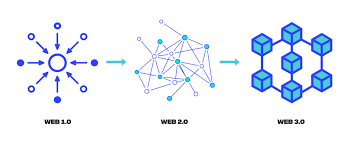
“We didn’t just upgrade the internet — we upgraded ownership.”
I still remember the first time I used the internet.
It was slow. Pages took minutes to load. But it felt magical.
Years later, social media arrived. We weren’t just reading anymore — we were posting, sharing, liking, building communities.
And today, something even bigger is happening.
The internet is changing again.
Welcome to Web3.
Chapter 1: The Internet We First Knew (Web1)
In the beginning, the internet was simple.
You could:
- Read information
- Visit websites
- Consume content
But you couldn’t interact much.
It was like reading a digital newspaper.
This was Web1 — the “Read-Only Internet.”
Chapter 2: The Social Revolution (Web2)
Then came social platforms.
We started:
- Creating content
- Sharing photos
- Messaging globally
- Building businesses online
Web2 became the “Read-Write Internet.”
But here’s something we rarely questioned:
We didn’t own our data.
- Social media platforms owned it
- Big companies controlled it
- Algorithms decided what we see
We were users — but not owners.
Chapter 3: The Question That Changed Everything
One day, someone asked:
“What if users could own their digital identity?”
That question gave birth to Web3.
And the foundation of Web3 is blockchain technology.
What Is Web3?
Web3 is the next evolution of the internet where:
- You own your digital assets
- You control your identity
- No central authority controls the system
- Trust is built through code, not corporations
At the heart of this shift is blockchain — a decentralized digital ledger.
Why Blockchain Changes Everything
Blockchain allows:
- Secure transactions
- Transparent systems
- Peer-to-peer transfers
- Smart contracts (automatic agreements)
Instead of trusting companies, you trust mathematics and consensus.
That is revolutionary.
Personal Connection: From User to Owner
Imagine this:
You post a video on a platform today.
- The platform earns revenue
- They decide visibility
- They can remove your content
In Web3:
- You own the content
- You control monetization
- Your identity is portable
- Your digital assets are yours
This shift changes power dynamics.
It changes the internet from:
👉 Platform-controlled
to
👉 User-owned
How Web3 Is Built on Blockchain
| Web2 | Web3 |
|---|---|
| Centralized servers | Decentralized nodes |
| Company-owned data | User-owned assets |
| Platform monetization | Creator monetization |
| Bank-controlled payments | Crypto & DeFi systems |
Blockchain enables:
- NFTs (digital ownership)
- DeFi (finance without banks)
- DAOs (community governance)
- Smart contracts
Why Blockchain Is the Next Digital Revolution
Every digital revolution follows a pattern:
- Information
- Interaction
- Ownership
Web1 → Information
Web2 → Interaction
Web3 → Ownership
This is not just a technical shift.
It is a power shift.
Real-World Impact of Web3
Blockchain-powered Web3 is already influencing:
- Finance (DeFi)
- Gaming (Play-to-earn)
- Identity verification
- Supply chain transparency
- Digital art & NFTs
- Government record systems
The internet is no longer just about browsing.
It’s about participating in decentralized economies.
Why This Matters to You
You may not realize it yet, but:
- Your digital identity has value
- Your data has value
- Your creativity has value
Web3 gives you ownership of that value.
Instead of being the product,
you become the participant.
The Future: Beyond Social Media
In the next decade:
- Wallets may replace usernames
- Tokens may replace loyalty points
- Smart contracts may replace paperwork
- DAOs may replace traditional organizations
And blockchain will be the invisible infrastructure powering it all.
Opinion
“Web1 connected information.
Web2 connected people.
Web3 connects value.”
We are standing at the edge of the next digital revolution.
The internet is evolving from something we use…
to something we own.
And blockchain is the bridge.