

In late January 2026, something remarkable happened on the global financial stage.
Changpeng “CZ” Zhao, the founder of the world’s largest cryptocurrency exchange — Binance — stood at the World Economic Forum (WEF) in Davos, Switzerland. It was his first official appearance there since:
- Binance’s legal settlement in 2023,
- His own guilty plea and prison term in 2024,
- And his presidential pardon in 2025.
But this wasn’t just a comeback story. From Davos, CZ revealed something deeper — a financial dynamic worth $33 trillion that shows how crypto — especially stablecoins and tokenized assets — has quietly become foundational to global payments and finance.
Let’s explore his journey and the larger story he highlighted — in a way anyone can understand.
📖 A Journey of Reinvention
Most people know CZ as the co-founder of Binance, one of the biggest cryptocurrency exchanges in the world.
But his recent years have been dramatic:
- 2023: Binance settled major US regulatory charges.
- Early 2024: CZ pleaded guilty to certain violations and served four months in a US prison.
- Late 2024: He was released after completing his sentence.
- October 2025: He received a presidential pardon, allowing him to travel and participate again in international forums.
This allowed him to return to Davos — not just as a crypto speaker, but as a representative of how digital money is now central to global finance.
📉 Why His Davos Presence Matters
CZ’s presence at Davos was not symbolic or nostalgic — it was strategic.
The WEF isn’t about viral speeches. It’s about global financial infrastructure. And at Davos, CZ was invited not as a fringe tech founder, but as someone whose work underpins real value flows in the modern economy.
This shows one simple truth:
Crypto is no longer just a speculative asset class — it’s becoming part of the plumbing of global finance.
💡 The $33 Trillion Secret: Stablecoins Are Bigger Than You Think
One of the most discussed figures CZ referenced is $33 trillion — the approximate annual transaction volume tied to stablecoins globally.
What this means in plain language:
- Stablecoins are digital tokens designed to keep their price stable — often pegged to traditional money like the US dollar.
- They’re used in payments, cross-border settlements, and growing real-world transactions.
- A volume like $33 trillion is comparable with huge financial systems like credit card networks or traditional payment rails.
In other words, stablecoins are no longer a fringe crypto experiment. They now operate on a scale that global finance cannot ignore.
This was the “secret” CZ highlighted — not the technology itself, but the scale of real activity behind it.
📊 Timeline: CZ’s Recent Road Back
| Year | Event |
|---|---|
| 2023 | Binance settles major enforcement action. |
| 2024 | CZ serves a four-month prison sentence. |
| 2025 | CZ receives a presidential pardon. |
| Jan 2026 | CZ speaks at Davos about stablecoins and tokenized finance. |
🏦 Stablecoins: From Crypto Niche to Financial Layer
At Davos, CZ and many other financial thinkers pointed out that:
- Stablecoins are now a real payments layer, not just crypto trading tools.
- They can support cross-border transactions more efficiently than traditional systems.
- Institutional demand (e.g., companies and banks) is increasing.
This is reinforced by data showing that stablecoin supply and usage has continued to grow, even when broader crypto prices are volatile.
🏛️ How the Financial World Is Responding
CZ’s comments reflect broader institutional trends:
✔ Global regulators now discuss how to integrate stablecoins responsibly.
✔ Central banks recognize that digital money is reshaping payments.
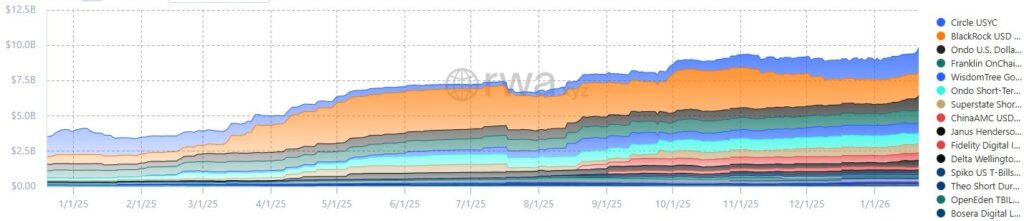
✔ Tokenized versions of traditional assets (like US Treasuries) are growing in use.
This isn’t ideological — it’s practical. When finance works faster and cheaper, policymakers pay attention.
📌 Why the Davos Moment Is Historic
CZ’s speech marked a shift:
Crypto technology isn’t being fought at the margins anymore — it’s being debated where global financial rules are shaped.
Instead of crypto vs. traditional finance, the question now is:
👉 Which parts of crypto become part of mainstream infrastructure — and how do we regulate them responsibly?
Stablecoins and programmable cash are now analyzed like money markets, not fringe investments.
🌟 In Simple Words
CZ’s journey from prison to Davos is not a comeback story alone — it’s a symbol of crypto’s evolution.
When a leader once jailed over compliance issues is invited to speak at the most elite global finance forum, it means:
- Crypto matters
- Crypto is here to stay
- Crypto is becoming part of real financial systems, not just speculative markets
And the $33 trillion number shows that this evolution is happening quietly, sustainably, and at huge economic scale.
🧠 My Opinion
The story isn’t about one person.
It’s about a technology that moved from fringe to functional, supported by real transactions, real usage, and real financial infrastructure.
As CZ himself demonstrated, the path from controversy to relevance isn’t easy — but it is real, measurable, and world-changing.
And now, the conversation isn’t if crypto matters, but how deeply it’s woven into the global financial fabric.
Disclaimer:
This blog is intended for educational and informational purposes only. It does not constitute financial, investment, legal, or professional advice of any kind. The views discussed are based on publicly available information and commentary, including reports and statements from third-party sources. Cryptocurrency and digital asset markets are volatile and involve risk. Readers are advised to conduct their own research and consult with certified financial or legal professionals before making any investment or business decisions. Neither the author nor the platform assumes responsibility for any financial outcomes resulting from the use of this information.