
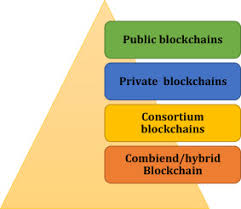
Not all blockchains are fully public or fully private. Some combine the best of both worlds. That’s where Consortium Blockchain and Hybrid Blockchain come in. They are like the “middle path” between open networks and restricted ones.
🤝 Consortium Blockchain
✅ What it is
A consortium blockchain is managed by a group of organizations instead of a single entity.
- Example: Banks, supply chain companies, or universities forming a group to run the blockchain.
- Technical word: Semi-decentralized → means no single person controls it, but not fully public either.
⭐ Benefits
- Shared responsibility: No single company has all the power.
- Faster than public blockchains: Since only a few trusted players validate.
- Privacy with trust: Information is visible to group members but not to outsiders.
⚠️ Cons
- Coordination needed: All members must agree, which sometimes slows decisions.
- Not fully open: The public cannot join freely.
🎯 Example
Several banks may join hands to track cross-border payments using a consortium blockchain. It makes transfers faster and safer without needing outside middlemen.
🌗 Hybrid Blockchain
✅ What it is
A hybrid blockchain combines public and private features. Some parts are open to everyone, while other parts are restricted.
- Example: Companies that want transparency in certain areas but privacy in sensitive data.
⭐ Benefits
- Flexibility: Best of both worlds—openness and control.
- Selective transparency: Public can see some data (for trust), while private data stays hidden.
- Efficiency: Faster than public networks but more secure than only private.
⚠️ Cons
- Complex design: Harder to build and manage.
- Trust issues: If not managed well, people may doubt which data is hidden.
🎯 Example
A hospital might use hybrid blockchain—patient health records are private, but overall hospital performance stats are public to build trust.
⚖️ Consortium vs Hybrid – At a Glance
| Feature | Consortium Blockchain 🤝 | Hybrid Blockchain 🌗 |
|---|---|---|
| Control | Shared by a group | Mix of private + public |
| Access | Only members | Public + private (depending on need) |
| Transparency | Limited | Selective |
| Speed | Fast | Fast & flexible |
| Examples | Banking alliances, R3 Corda | IBM Food Trust, Healthcare systems |
💡 Why They Are Used
- Consortium Blockchain: Ideal for industries where multiple organizations need to work together securely—like banks, logistics companies, or universities.
- Hybrid Blockchain: Perfect for businesses that need a balance of privacy and openness, such as hospitals, government systems, or supply chains.
Comparison of Blockchain Types
| Type of Blockchain | What it Does | ✅ Pros (Advantages) | ⚠️ Cons (Disadvantages) | Examples |
|---|---|---|---|---|
| Public Blockchain 🌍 | Open to everyone. Anyone can join, read, and add transactions. | – Full transparency 🌐 – Highly secure 🔐 – Decentralized (no single owner) | – Slower (because many users validate) ⏳ – High energy use (like Bitcoin mining) ⚡ | Bitcoin, Ethereum |
| Private Blockchain 🔒 | Controlled by a single organization. Access is restricted. | – Very fast ⚡ – Low cost 💰 – Full privacy of data 🔑 | – Centralized (trust on one authority) 🏢 – Less transparent ❌ | Hyperledger, Ripple (XRP for banks) |
| Consortium Blockchain 🤝 | Managed by a group of organizations working together. | – Shared control (not just one) 🤝 – Faster than public ⏳ – More secure than private 🔐 | – Requires coordination 🕐 – Limited access (not for public) 🚫 | R3 Corda (banks), Energy Web |
| Hybrid Blockchain 🌗 | Mix of public + private. Some data is open, some is private. | – Flexible (best of both worlds) 🔄 – Public trust + private security 🌐+🔒 – Scalable and efficient 📈 | – Complex design 🛠️ – Risk of doubt if too much data is hidden 🤔 | IBM Food Trust, Healthcare systems |
🌟 Quick Takeaway
- Public = Freedom & Transparency → best for open crypto like Bitcoin.
- Private = Speed & Control → best for companies needing privacy.
- Consortium = Shared Power → best for banks, logistics, and alliances.
- Hybrid = Balance → best for government, healthcare, and large businesses.
If blockchain were like schools:
- Public = Open playground where anyone can come.
- Private = Private school with one strict principal.
- Consortium = Group of schools sharing rules together.
- Hybrid = A school that opens its library to public but keeps exam papers private.
That balance makes Hybrid and Consortium the future for small businesses, governments, and industries.
🌟 My Opinion
Consortium and Hybrid blockchains are like teamwork with rules. Public blockchains give power to people, private blockchains give control to one organization, but consortium/hybrid models allow collaboration with balance.
I believe in the future, more companies and governments will adopt hybrid models, as they offer the trust of public blockchains with the privacy of private ones.
For more Click here : https://n-k.co.in/chapter-4-public-private-blockchain-two-sides-of-the-same-coin/