
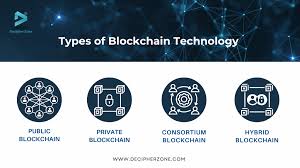
Understanding Different Blockchain Technologies
Blockchain is not just about Bitcoin — it’s a technology that has grown into different types, each with its own features, uses, and strengths. In this chapter, we’ll explore the main blockchain technologies like Bitcoin, Ethereum, and Hyperledger in simple words, with examples and opinions.
🔹 Introduction
Think of blockchain as the “internet of trust.” Just like the internet connects people for sharing information, blockchain connects people for sharing value (money, data, contracts) in a secure and transparent way.
Over the years, different blockchains have been developed to solve different problems. Let’s look at the three most important ones.
🔹 Bitcoin – The Pioneer
- What it is: Bitcoin was the first blockchain (2009). It’s mainly a digital currency and a store of value.
- How it works: People can send Bitcoin directly to each other without a bank.
- Example: If I want to send ₹1,000 worth of Bitcoin to my friend in the US, I don’t need PayPal or a bank—just the Bitcoin network.
- Opinion: Bitcoin is powerful as “digital gold.” It may not handle everything, but it gave birth to the blockchain revolution.
🔹 Ethereum – The Smart Blockchain
- What it is: Launched in 2015, Ethereum allows developers to create smart contracts (self-running programs that execute when conditions are met).
- How it works: Beyond money, Ethereum lets you build apps (called dApps) for things like games, voting, or finance.
- Example: A farmer and a shopkeeper can make a smart contract where payment is released automatically when crops are delivered. No middleman, no disputes.
- Opinion: Ethereum made blockchain useful beyond just payments—it opened doors for DeFi (Decentralized Finance), NFTs (digital art), and Web3.
🔹 Hyperledger – Blockchain for Businesses
- What it is: Unlike Bitcoin and Ethereum, Hyperledger is not public. It’s a permissioned blockchain built for businesses and organizations.
- How it works: Only authorized members can join, and it’s designed for privacy and speed.
- Example: A supply chain company (like Walmart) can use Hyperledger to track where food products are coming from, ensuring safety and quality.
- Opinion: Hyperledger shows that blockchain isn’t just for crypto—it can make companies more efficient and transparent.
🔹 My Opinion
Blockchain is like water—it takes the shape of the container. Bitcoin gave us digital money, Ethereum gave us programmable money, and Hyperledger gave businesses private and efficient systems. Each has its own value depending on what problem we want to solve.
The future will likely combine all these types—public blockchains for openness, and private blockchains for business efficiency.